Written & Reviewed by Akash Biswas, MSW | Former Medicaid Caseworker Trainer | Verified against official Medicaid.gov, KFF, FDA, and CMS sources | Last Updated: August 2026
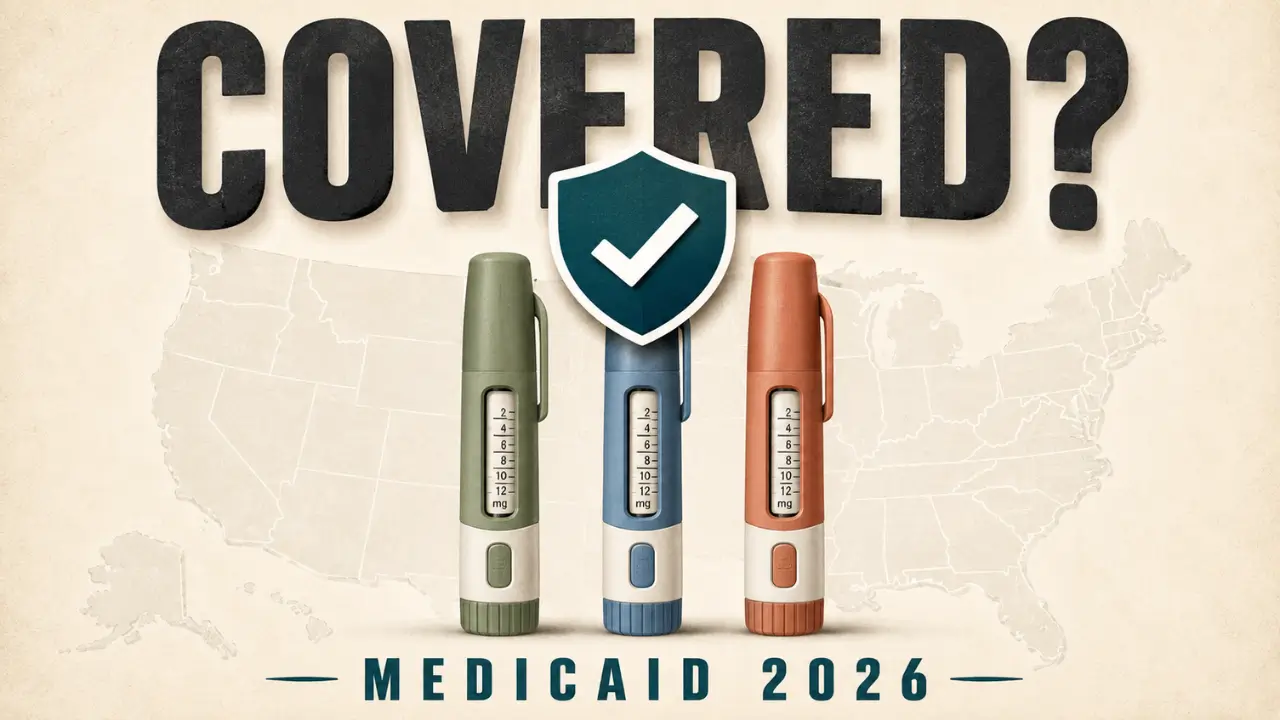
Medicaid may cover Wegovy, Zepbound, or Ozempic in 2026. It depends on your state, your diagnosis, and your specific Medicaid plan. There is no single nationwide rule that covers all three drugs for everyone.
This guide breaks down what each drug is approved for, when Medicaid must cover it, and when your state gets to choose.
Quick Summary:
- Medicaid must cover these drugs for diabetes, heart risk, or sleep apnea in most cases
- Coverage for weight loss alone is optional and set by each state
- Only a small number of states cover GLP-1 drugs for obesity in 2026
- Ozempic is not FDA-approved for weight loss, even though it contains the same active ingredient as Wegovy
- Prior authorization is almost always required
- Check your state’s exact rules with our Medicaid Eligibility calculator in 2026
What Is Medicaid?
Medicaid is a health coverage program for people with low income. It is run by both the federal government and your state.
Medicaid pays for doctor visits, hospital stays, and prescription drugs. Whether a specific drug is covered can depend on why your doctor prescribed it.
Does Medicaid Cover Wegovy, Zepbound, and Ozempic?
Each of these three drugs has a different FDA approval. That approval decides whether Medicaid must cover it or whether your state gets to decide.
Here is how the rules break down by drug.
Wegovy (Semaglutide)
Wegovy is FDA-approved for chronic weight management. It is also approved to lower the risk of major heart problems in adults with obesity or overweight and existing heart disease, and for a liver condition called MASH.
Medicaid coverage for weight loss alone is optional for your state. Coverage for the heart-risk use is generally required, as long as it meets your plan’s medical necessity and prior authorization rules.
Zepbound (Tirzepatide)
Zepbound is FDA-approved for chronic weight management. It is also approved for moderate-to-severe obstructive sleep apnea in adults with obesity.
Coverage for weight loss alone is optional for your state. Coverage for the sleep apnea use is generally required, subject to your plan’s eligibility and utilization rules.
Ozempic (Semaglutide)
Ozempic is FDA-approved for type 2 diabetes. It also has approved uses for lowering cardiovascular and kidney risk in adults with type 2 diabetes.
Ozempic is not FDA-approved for weight loss. Medicaid coverage is generally required when it’s prescribed for diabetes or a related approved use, but your state can still require prior authorization.
Why Weight-Loss Coverage Is Optional
Federal law lets states leave out drugs used only for weight loss, weight gain, or anorexia from their Medicaid drug list. This is why obesity coverage looks so different from state to state.
As of January 2026, 13 state Medicaid programs covered GLP-1 drugs for obesity through fee-for-service Medicaid. That number has kept shifting through the year — some states like California, New Hampshire, Pennsylvania, and South Carolina dropped obesity coverage, while North Carolina added it back in December 2025.
What This Means for You
- Your state may cover Wegovy or Zepbound for weight loss, or it may not
- Coverage can change during the year, so a “yes” today isn’t guaranteed next quarter
- Managed care plans within your state can sometimes differ from the state’s base Medicaid rules
- The only way to know your state’s current rule is to check directly
Diabetes and Heart-Risk Coverage Is More Stable
Coverage for an FDA-approved medical reason, like diabetes or heart disease, works differently than weight-loss coverage. Medicaid programs are generally required to cover a drug for its approved medical uses, even if they choose not to cover it for weight loss.
This is why Ozempic is covered far more consistently than Wegovy or Zepbound. Diabetes is a required coverage category. Weight loss is not.
The BALANCE Model: A New Option for States
CMS launched a program in 2026 called the BALANCE Model. It lets state Medicaid programs get better drug prices and coverage terms for certain GLP-1 medications.
States can join this model on a rolling basis from May 2026 through January 1, 2027. Joining is voluntary, so it does not automatically add Wegovy, Zepbound, or Ozempic to every state’s coverage. It’s a tool your state can choose to use, not a nationwide mandate.
Medicare Is Not the Same as Medicaid
You may have heard about a new Medicare benefit for GLP-1 drugs. This is a separate program from Medicaid, and the two work differently.
The Medicare GLP-1 Bridge started July 1, 2026, for people with Medicare Part D. It is scheduled to run through the end of 2027. This program does not change what Medicaid covers, and it does not include Ozempic.
How to Check Your State’s Coverage
Because every state Medicaid program sets its own weight-loss drug rules, the fastest way to get a real answer is to check your state directly. Your income and household size also affect whether you qualify for Medicaid in the first place.
- Confirm you qualify for Medicaid. Use our Medicaid Eligibility calculator in 2026 to see if your income fits your state’s limits.
- Check your state’s exact income rules. Review Medicaid Income Limits by State in 2026 for your household size.
- Ask your doctor to check the diagnosis code. Coverage often depends on whether the prescription is for diabetes, heart risk, sleep apnea, or weight loss alone.
- Call your state Medicaid office or managed care plan. Ask specifically about prior authorization requirements for the drug your doctor prescribed.
- Review what your plan pays providers. Our Medicaid Fee Schedule in 2026 shows how Medicaid reimburses providers for covered services.
If you’re not sure whether you qualify for Medicaid at all, start with Medicaid Eligibility in 2026 to review the basic rules before you dig into drug coverage.
FAQ
Q: Does Medicaid cover Wegovy for weight loss in 2026?
A: It depends on your state. As of January 2026, 13 states covered GLP-1 drugs like Wegovy for obesity treatment through fee-for-service Medicaid. Many other states do not cover it for weight loss, though they may still cover it for an approved heart-risk use.
Q: Is Ozempic covered by Medicaid?
A: Yes, in most cases, when prescribed for type 2 diabetes or a related approved use. Ozempic is not FDA-approved for weight loss, so it should not be requested or covered as a weight-loss drug.
Q: Does Medicaid cover Zepbound for sleep apnea?
A: Generally, yes. Zepbound is FDA-approved for obstructive sleep apnea in adults with obesity, and this is a required coverage category, subject to medical necessity and prior authorization rules.
Q: Why does my state not cover GLP-1 drugs for weight loss?
A: Federal law allows states to leave weight-loss-only drugs off their Medicaid drug list. Coverage for diabetes, heart risk, and sleep apnea works differently, because those are required coverage categories.
Q: What is the BALANCE Model?
A: It’s a voluntary CMS program launched in 2026 that helps state Medicaid programs get better prices on GLP-1 drugs. States can join between May 2026 and January 1, 2027, but joining does not guarantee coverage for every beneficiary.
Q: Does the new Medicare GLP-1 benefit apply to Medicaid too?
A: No. The Medicare GLP-1 Bridge, which started July 1, 2026, is a separate Medicare Part D program. It does not change Medicaid coverage rules and does not include Ozempic.
Last Updated: August 2026
Sources:
- Medicaid.gov
- KFF, Medicaid Coverage of and Spending on GLP-1s
- CMS, BALANCE Model
- CMS, Medicare GLP-1 Bridge
Disclaimer: CheckMedicaid.com is not affiliated with any government agency. This content is for educational purposes only. For official eligibility and coverage information, contact your state Medicaid office or visit Medicaid.gov.