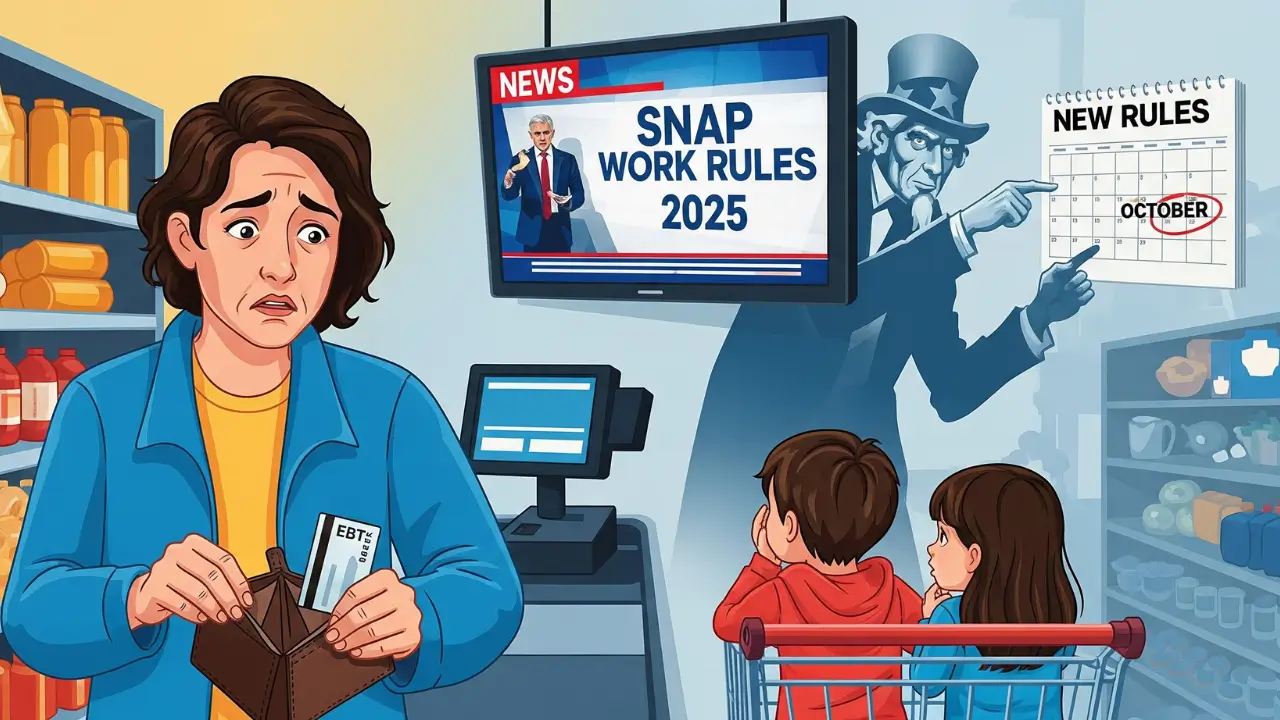

For most households, the SNAP income limit in 2026 depends on household size. In the 48 states, D.C., Guam, and the U.S.
Virgin Islands, a one-person household has a current gross limit of $1,696 per month and a net limit of $1,305. A four-person household has limits of $3,483 gross and $2,680 net.
These federal figures apply through September 30, 2026. New FY2027 SNAP income limits take effect October 1, 2026.
This guide explains the current limits, upcoming changes, deductions, and state rules.
Quick Summary
- A one-person household has a $1,696 gross limit in FY2026.
- A four-person household has a $3,483 gross limit.
- Net income limits are lower after allowed deductions.
- Many states use BBCE and may allow higher gross income.
- FY2027 limits begin on October 1, 2026.
- Your state agency makes the final eligibility decision.
SNAP Income Limits for 2026
The federal SNAP income limits are updated each year. For FY2026, the current rules run from October 1, 2025, through September 30, 2026.
For most households, SNAP looks at both gross income and net income. Gross income means income before allowed deductions. Net income means income after those deductions.
FY2026 SNAP income limits
| Household size | Gross monthly limit | Net monthly limit |
|---|---|---|
| 1 | $1,696 | $1,305 |
| 2 | $2,292 | $1,763 |
| 3 | $2,888 | $2,221 |
| 4 | $3,483 | $2,680 |
| 5 | $4,079 | $3,138 |
| 6 | $4,675 | $3,596 |
| 7 | $5,271 | $4,055 |
| 8 | $5,867 | $4,513 |
| Each additional person | +$596 | +$459 |
These figures cover the 48 contiguous states, D.C., Guam, and the U.S. Virgin Islands. Alaska and Hawaii use higher limits.
Alaska and Hawaii SNAP income limits
| Household size | Alaska gross | Alaska net | Hawaii gross | Hawaii net |
|---|---|---|---|---|
| 1 | $2,118 | $1,630 | $1,949 | $1,500 |
| 2 | $2,864 | $2,203 | $2,635 | $2,027 |
| 3 | $3,609 | $2,776 | $3,321 | $2,555 |
| 4 | $4,354 | $3,350 | $4,007 | $3,082 |
| 5 | $5,100 | $3,923 | $4,692 | $3,610 |
| 6 | $5,845 | $4,496 | $5,378 | $4,137 |
| 7 | $6,590 | $5,070 | $6,064 | $4,665 |
| 8 | $7,336 | $5,643 | $6,750 | $5,192 |
USDA publishes separate standards for Alaska and Hawaii.
A family of four earning under $3,483 a month passes the gross test in most states. Check the SNAP calculator to see your exact numbers.
Source: USDA SNAP Eligibility
New SNAP Income Limits Starting October 1, 2026
The FY2027 SNAP limits start on October 1, 2026. USDA issued the FY2027 Cost-of-Living Adjustment memo on August 21, 2026.
Here are the new federal figures for the 48 states, D.C., Guam, and the U.S. Virgin Islands.
FY2027 SNAP income limits
| Household size | Gross monthly limit | Net monthly limit |
|---|---|---|
| 1 | $1,729 | $1,330 |
| 2 | $2,345 | $1,804 |
| 3 | $2,960 | $2,277 |
| 4 | $3,575 | $2,750 |
| 5 | $4,191 | $3,224 |
| 6 | $4,806 | $3,697 |
| 7 | $5,421 | $4,170 |
| 8 | $6,037 | $4,644 |
| Each additional person | +$616 | +$474 |
USDA also lists higher FY2027 standards for Alaska and Hawaii.
FY2027 Alaska and Hawaii limits
| Household size | Alaska gross | Alaska net | Hawaii gross | Hawaii net |
|---|---|---|---|---|
| 1 | $2,162 | $1,663 | $1,989 | $1,530 |
| 2 | $2,931 | $2,255 | $2,697 | $2,075 |
| 3 | $3,700 | $2,846 | $3,404 | $2,619 |
| 4 | $4,469 | $3,438 | $4,112 | $3,163 |
| 5 | $5,238 | $4,030 | $4,819 | $3,707 |
| 6 | $6,008 | $4,621 | $5,527 | $4,251 |
| 7 | $6,777 | $5,213 | $6,234 | $4,795 |
| 8 | $7,546 | $5,805 | $6,941 | $5,340 |
These standards apply from October 1, 2026, through September 30, 2027.
2026 vs. 2027 SNAP Income Limits
Here’s how the numbers are changing this October.
| Household Size | 2026 Gross | 2027 Gross | Change | 2026 Net | 2027 Net | Change |
|---|---|---|---|---|---|---|
| 1 | $1,696 | $1,729 | +$33 | $1,305 | $1,330 | +$25 |
| 2 | $2,292 | $2,345 | +$53 | $1,763 | $1,804 | +$41 |
| 3 | $2,888 | $2,960 | +$72 | $2,221 | $2,277 | +$56 |
| 4 | $3,483 | $3,575 | +$92 | $2,680 | $2,750 | +$70 |
| 5 | $4,079 | $4,191 | +$112 | $3,138 | $3,224 | +$86 |
| 6 | $4,675 | $4,806 | +$131 | $3,596 | $3,697 | +$101 |
| 7 | $5,271 | $5,421 | +$150 | $4,055 | $4,170 | +$115 |
| 8 | $5,867 | $6,037 | +$170 | $4,513 | $4,644 | +$131 |
A few other numbers are also going up in 2027:
- Max monthly benefit for a family of four: $994 → $1,023
- Standard deduction (1–3 people): $209 → $217
- Asset limit for seniors and disabled people: $4,500 → $4,750
- General asset limit stays the same: $3,000
If you’re reading this before October 1, 2026, use the 2026 numbers. After that date, use 2027. Check your exact benefit with our SNAP calculator.
Source: USDA FY2026 and FY2027 COLA memos
Do These Federal SNAP Income Limits Apply in Every State?
No. Many states let you earn more and still qualify.
This is called Broad-Based Categorical Eligibility, or BBCE. Most states use it. BBCE raises the gross income limit. Some states allow up to 200% of the poverty level, not just 130%.
Here’s what that means in real numbers. For a family of four in 2026:
- Federal floor (130%): $3,483 a month
- Some states allow up to 200%: about $5,360 a month
Your net income test usually stays the same. BBCE mainly raises the gross income limit, not the net one.
Illinois is a good example. Illinois uses BBCE to raise its gross limit to 165% of poverty. Households with a senior or disabled member get 200%. Illinois also drops the asset test for most families. See the full breakdown on our Illinois SNAP income limits page.
Your next step: Don’t rule yourself out based on the federal number alone. Contact your state SNAP agency to ask about your state’s BBCE limit, or use our calculator.
Source: USDA Broad-Based Categorical Eligibility
Gross Income vs. Net Income for SNAP
Understanding these two numbers is important.
What is gross income for SNAP?
Gross income is total income before allowed deductions. It can include wages and other countable income.
For many households, the federal gross standard is 130% of the poverty level. State BBCE rules may allow a higher limit.
What is net income for SNAP?
Net income is gross income minus allowed SNAP deductions.
For the standard federal test, the net-income limit is 100% of the poverty level. A household with an elderly or disabled member generally only has to meet the net-income test.
Your next step is to look at your deductions.
What Income Counts for SNAP?
Most cash coming into your home counts as income. Here’s what SNAP counts:
- Wages and salary from a job
- Self-employment earnings
- Social Security, SSDI, and SSI
- Unemployment benefits
- Pensions and retirement payments
- Child support you receive
- Rental income (after expenses)
What doesn’t count:
- Money you borrow, like loans
- Student financial aid
- Tax refunds
- Small, one-time gifts under $30 a quarter
- Money from selling your own things
Does Social Security count as income for SNAP? Yes. Social Security, SSDI, and SSI payments all count toward your income.
Does unemployment count for SNAP? Yes, unemployment benefits count as income too.
Source: USDA SNAP Eligibility
SNAP Deductions That Can Lower Your Income
Deductions can reduce the income used in the SNAP calculation.
20% earned-income deduction
SNAP allows a 20% deduction from earned income.
This can help households with wages.
Standard deduction
For FY2026, the standard deduction is $209 for households of one to three people. It is higher for larger households.
For FY2027, the standard deduction rises to $217 for households of one to three people. It rises for larger households too.
| Household size | FY2026 | FY2027 |
|---|---|---|
| 1–3 | $209 | $217 |
| 4 | $223 | $229 |
| 5 | $261 | $268 |
| 6+ | $299 | $308 |
Dependent-care deduction
A qualifying household may deduct actual dependent-care costs needed for work, training, or education.
There is not a general federal rule giving a fixed $200 or $175 per-child deduction. Avoid using those old figures.
Medical expense deduction
Households with elderly or disabled members may deduct qualifying medical costs above $35 per month when the expenses are not covered by insurance or another source.
Shelter deduction
Qualifying shelter costs can also reduce net income. This can include certain rent, utilities, and other shelter expenses.
For FY2026, the maximum excess shelter deduction in the 48 states and D.C. is $744. For FY2027, it rises to $769.
For a personalized estimate, use the SNAP calculator.
What If Your Income Is Above 130% of the Poverty Level?
You may still qualify.
A federal 130% figure is not always the final state cutoff. Many states use BBCE, and their gross-income limits can be higher.
Your household may also have deductions that lower net income.
That is why a simple online chart cannot decide your case.
Check your state’s rules before assuming you are ineligible.
SNAP Income Rules for Seniors and People With Disabilities
SNAP has special rules for some households with elderly or disabled members.
In SNAP, a person is considered elderly at age 60 or older.
A household with an elderly or disabled member generally only has to meet the net-income test under regular federal rules.
There is also a special household rule.
A person who is 60 or older and cannot buy and prepare food separately because of a permanent disability may qualify as a separate SNAP household. This can apply when other people in the home have income no higher than 165% of the poverty level.
FY2026 165% income standards
| Household size | Gross monthly limit |
|---|---|
| 1 | $2,152 |
| 2 | $2,909 |
| 3 | $3,665 |
| 4 | $4,421 |
| 5 | $5,177 |
| 6 | $5,934 |
| 7 | $6,690 |
| 8 | $7,446 |
FY2027 165% income standards
| Household size | Gross monthly limit |
|---|---|
| 1 | $2,195 |
| 2 | $2,976 |
| 3 | $3,757 |
| 4 | $4,538 |
| 5 | $5,319 |
| 6 | $6,100 |
| 7 | $6,881 |
| 8 | $7,662 |
These special standards apply to the specific separate-household situation. They are not a general higher SNAP limit for every senior household.
SNAP Resource and Asset Limits
Income is only one part of SNAP eligibility.
Under the federal standard for FY2026, the resource limit is:
- $3,000 for most households
- $4,500 when at least one household member is 60 or older or disabled
FY2027 raises the second amount to $4,750. The general $3,000 limit stays unchanged.
But state BBCE rules can change resource limits.
That is another reason to check your state’s rules.
Frequently Asked Questions
What is the SNAP income limit for one person in 2026?
The gross income limit is $1,696 a month. The net income limit is $1,305 a month. Your state may allow a higher gross limit through BBCE.
What is the SNAP income limit for a family of four?
The gross income limit is $3,483 a month for 2026. The net income limit is $2,680 a month.
What are the new SNAP income limits for 2027?
Starting October 1, 2026, the limits rise to $1,729 gross for one person and $3,575 gross for a family of four.
Does SNAP use gross or net income?
Most households must pass both tests. Gross income is checked first, then net income after deductions.
Can I qualify if my income is above 130% of the poverty level?
Yes, in many states. Most states use BBCE to raise the gross income limit, sometimes up to 200% of poverty.
Does Social Security count as SNAP income?
Yes. Social Security, SSDI, and SSI payments all count as income for SNAP.
Do rent and childcare expenses reduce SNAP income?
Yes. Real childcare costs and housing costs above a certain amount can lower your net income and raise your benefit.
Does every state use the same SNAP income limit?
No. The federal number is a floor. Most states raise it through BBCE, and each state sets its own percentage.
When do SNAP income limits change?
Every October 1. USDA updates the numbers each year based on the cost of living.
Official Sources
For the latest rules, use primary government sources.
- USDA SNAP Eligibility
- USDA SNAP COLA Standards
- USDA FY2027 SNAP COLA Memo
- USDA Broad-Based Categorical Eligibility
- USAGov SNAP and Food Stamps
- USAGov State Social Services Agencies
Last verified: September 1, 2026
Important: SNAP rules can change. Your state SNAP agency makes the final eligibility decision.