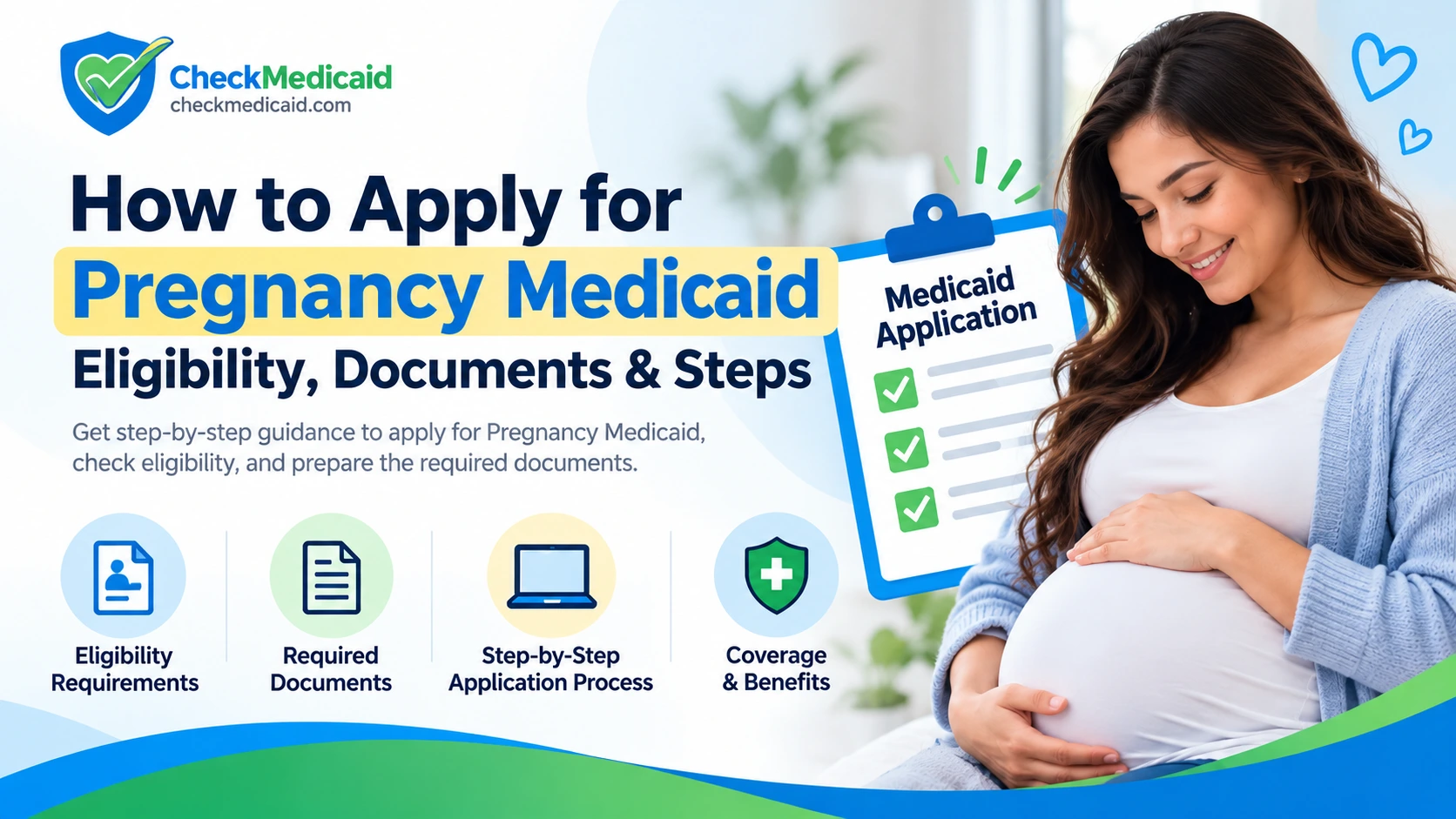
Pregnancy Medicaid helps eligible pregnant individuals get free or low-cost health coverage during pregnancy and after childbirth. To apply, check your state’s income and eligibility rules, gather the required information, and submit an application through your state Medicaid agency or HealthCare.gov. You can apply at any time of the year, and exact eligibility requirements vary by state.
Pregnancy should be a time to focus on your health and your baby, not worry about how to pay for every medical visit. If you do not have health insurance or need help with healthcare costs, Medicaid may offer an option worth exploring.
The application process may seem confusing at first, especially when income limits and documents differ between states. However, knowing what to prepare can make the process easier.
In this blog, we will explain who may qualify, which documents you may need, how to apply step by step, and what to do if you need coverage before your application is approved.
Table of Contents
What Is Pregnancy Medicaid?
Pregnancy Medicaid is health coverage provided through Medicaid for eligible pregnant individuals. It can help pay for covered pregnancy-related healthcare, childbirth, and postpartum services.
Medicaid is a joint federal and state program. The federal government sets broad rules, while each state manages its program within those requirements. This is why eligibility, covered services, and application procedures can differ across the country.
According to HealthCare.gov, pregnant people may qualify for Medicaid or the Children’s Health Insurance Program (CHIP), depending on their circumstances and state rules.
Who Is Eligible for Pregnancy Medicaid?
You may qualify based on your income, household size, pregnancy status, state residency, and other eligibility requirements. Your citizenship or immigration status may also affect eligibility.
Here are the main factors to check:
- Income: Your household income must meet the applicable state limit.
- Household size: The number of people in your household affects the income calculation. Pregnancy may also affect how household size is counted.
- State residency: You generally need to live in the state where you apply.
- Pregnancy status: The program has specific eligibility rules for pregnant applicants.
- Citizenship or immigration status: Rules depend on federal requirements and the state program.
What Is the Income Limit for Pregnancy Medicaid?
There is no single nationwide income limit for every pregnant applicant. States set different income standards, and the applicable limit may depend on household size and the coverage category.
For this reason, check the current rules for your state rather than relying on a national estimate.
You can review our Medicaid Eligibility by State in 2026 guide or use the Medicaid Calculator to explore your possible eligibility.
Remember that an online estimate is not an official eligibility decision. Your state Medicaid agency makes the final determination.
How to Apply for Pregnancy Medicaid Step by Step
You can complete a pregnancy medicaid application through your state agency or, in many cases, through HealthCare.gov. Follow these steps to get started.
Step 1: Find Your State Medicaid Agency
Visit USA.gov’s Medicaid application guide and select your state’s Medicaid agency. Its website should explain eligibility rules, available application methods, and any state-specific instructions.
Step 2: Prepare Your Information
Before starting, gather your household details, income information, contact details, and any documents the state requests. Having this information ready can help you complete the form more easily.
Step 3: Complete the Application
Apply through your state’s online portal or use another available method, such as a phone or paper application. You can also start through HealthCare.gov and request help with health coverage. If your information indicates possible Medicaid eligibility, it can be sent to your state agency.
Answer every question accurately. If you are unsure how to answer a question, contact the agency or an enrollment assister instead of guessing.
Step 4: Submit Supporting Documents
Upload, mail, or provide the requested documents according to your state’s instructions. Keep copies of your application and any confirmation number for your records.
Step 5: Respond to Follow-Up Requests
The agency may contact you for additional information. Check your mail, email, and application account regularly, and respond by the stated deadline.
Step 6: Review Your Eligibility Decision
Read the decision notice carefully. If you are approved, check your coverage start date and benefits. If you are denied, review the reason and the instructions for requesting a review or appeal.
What Documents Are Needed to Apply?
The documents required for a pregnancy medicaid application vary by state and individual circumstances. You may be asked to provide:
- Proof of pregnancy: Pregnancy verification or estimated due date, if requested.
- Proof of income: Recent pay stubs, employer information, or other income records.
- Identity information: Your name, date of birth, and identification details.
- Social Security number: If applicable under the program’s requirements.
- Citizenship or immigration documents: If required to determine eligibility.
- Household information: Details about household members and relevant relationships.
- Other insurance details: Information about current coverage or insurance offered through an employer, if applicable.
This is a preparation checklist, not a universal document requirement. Follow the official instructions from your state agency, because some information may be verified electronically.
What Is Presumptive Eligibility During Pregnancy?
Presumptive eligibility is a process that may allow eligible individuals to receive temporary Medicaid coverage while their full application is being processed. It is available only where the state has adopted the applicable process and the person meets its requirements.
If you need prenatal care soon, contact your state Medicaid agency or ask your prenatal clinic whether it can help you check for presumptive eligibility for pregnant women.
Do not assume that visiting a clinic automatically provides coverage. Ask whether you qualify, which services are covered, and what you must do to complete the full application.
What Does Pregnancy Medicaid Cover?
Covered services depend on your state’s Medicaid program and your eligibility category. Pregnancy-related benefits may include prenatal visits, childbirth services, and postpartum care, along with other covered medical services.
Federal rules generally require pregnancy-related Medicaid coverage to continue for at least 60 days after the pregnancy ends. States can provide extended postpartum coverage for 12 months. Check your state’s current rules to confirm the coverage period that applies to you.
For more details about income rules and available coverage, see our Medicaid Income Limits guide.
How Long Does Approval Take?
There is no single processing time that applies to every state and every application. The time needed may depend on your state’s procedures, whether your information is complete, and whether the agency needs extra documents.
To avoid unnecessary delays, submit accurate information, provide requested documents promptly, and check for messages from the agency. If you need medical care before a decision arrives, ask your state agency or healthcare provider whether temporary coverage or other low-cost options are available.
What If Your Pregnancy Medicaid Application Is Denied?
If your application is denied, read the notice to understand why. The state should provide information about the decision and any available review or appeal process.
You can contact the agency to ask about missing documents, income calculations, or other issues that affected the decision. Follow the deadline and instructions in the notice.
You may also check whether you qualify for another coverage option through HealthCare.gov. Do not assume that a denial means you have no options.
Conclusion
Getting health coverage during pregnancy can help you plan for prenatal care, delivery, and recovery with greater confidence. The most important first step is to check your state’s current rules and submit complete, accurate information.
Do not delay checking your options because you are unsure about your income or documents. Start with your official state agency and confirm what applies to your situation.
Visit CheckMedicaid.com to explore Medicaid eligibility information and take the next step toward understanding your coverage options.
FAQ
1. Can I apply for Pregnancy Medicaid at any time?
Yes. Medicaid applications are accepted throughout the year. You do not need to wait for an annual open enrollment period.
2. Can I qualify if I already have health insurance?
Possibly. Eligibility depends on your circumstances and state rules. Report your current insurance accurately and ask your state agency how it affects your application.
3. Can I apply online?
Yes. You can generally apply through your state Medicaid agency’s website. You may also start through HealthCare.gov and request help with health coverage.
4. Do I need proof of pregnancy to apply?
Your state may ask for pregnancy verification or your estimated due date. Check the official application instructions to confirm which documents are required.
5. How long does Pregnancy Medicaid last after childbirth?
Federal rules generally require coverage for at least 60 days after the pregnancy ends, while states can extend postpartum coverage to 12 months. Your state’s rules determine the period that applies to you.