Last Updated: February 2026
What Are the Illinois Medicaid Income Limits for 2026?
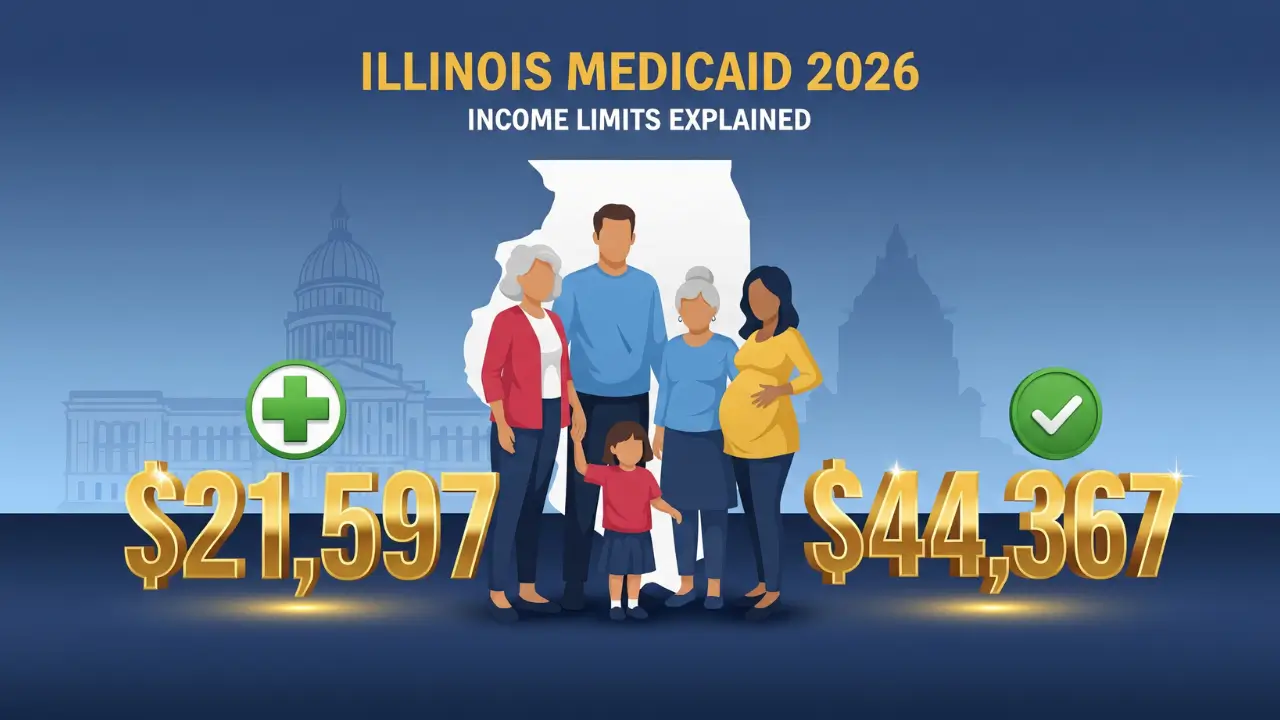
In 2026, Illinois Medicaid income limits vary by category. A single adult qualifies with income up to $21,597 annually ($1,800 monthly).
A family of four can earn up to $44,367 per year. Children and pregnant women have much higher limits, reaching 318% of the Federal Poverty Level.
Quick Article Summary:
- Single adults qualify for Medicaid with annual income under $21,597
- Families of four can earn up to $44,367 and still qualify
- Children under 19 have income limits up to $102,237 for a family of four
- Seniors and disabled adults face stricter asset rules ($17,500 limit)
- No asset test exists for adults under 65 without disabilities
- Illinois offers spend-down programs for those slightly over income limits
Understanding Illinois Medicaid Programs
Illinois runs its Medicaid program through two state agencies. The Illinois Department of Healthcare and Family Services (HFS) handles most medical coverage decisions.
The Illinois Department of Human Services (IDHS) processes applications and determines eligibility.
The state uses two different methods to calculate income. MAGI (Modified Adjusted Gross Income) applies to most people under 65.
Non-MAGI rules apply to seniors, blind individuals, and people with disabilities.
What Is MAGI?
MAGI includes wages, salaries, and self-employment income. It also counts unemployment benefits and taxable Social Security.
It does not include child support, SSI benefits, or workers’ compensation.
2026 Income Limits by Category
Understanding which category you fall into is essential. Each program has different income thresholds and rules.
Adults Ages 19-64 (Standard Medicaid)
Most working-age adults fall into this category. Illinois expanded Medicaid in 2014, making coverage available to all low-income adults.
| Household Size | Monthly Income | Annual Income |
|---|---|---|
| 1 person | $1,800 | $21,597 |
| 2 people | $2,432 | $29,187 |
| 3 people | $3,065 | $36,777 |
| 4 people | $3,697 | $44,367 |
| 5 people | $4,330 | $51,957 |
Important facts:
- No asset test required
- No dependent children needed
- Covers over 688,000 Illinois adults
- Based on 138% of Federal Poverty Level
If your income exceeds these limits, you may qualify for subsidized Marketplace insurance. Learn more about the general Illinois Medicaid eligibility requirements for 2026.
Children Under Age 19 (All Kids)
Illinois provides excellent coverage for children. Even middle-income families often qualify for some level of assistance.
| Program Level | Income Limit (Family of 4) | Monthly Cost |
|---|---|---|
| All Kids Assist | Up to $102,237/year | Free |
| All Kids Share | $102,237-$150,000/year | Low premiums |
| All Kids Premium | Above $150,000/year | Higher premiums |
Key benefits:
- No asset test
- Coverage includes dental and vision
- Unborn babies count toward household size
- American Indian/Alaska Native children pay nothing
Pregnant Women (Moms & Babies)
Pregnant women receive generous coverage in Illinois. The state recently extended postpartum benefits to 12 months.
| Household Size | Monthly Income | Annual Income |
|---|---|---|
| 1 person | $2,787 | $33,444 |
| 2 people | $3,764 | $45,168 |
| 3 people | $4,742 | $56,904 |
| 4 people | $5,719 | $68,628 |
Special features:
- Presumptive eligibility available (instant temporary coverage)
- No premiums or copays
- Baby automatically covered for first year
- Based on 213% Federal Poverty Level
Parents and Caretakers
If you have children under 19 living with you, you qualify as a parent or caretaker. You face the same income limits as standard adults: 138% FPL.
You must have a dependent child in your home. The child must be under 19 years old.
Seniors and People with Disabilities (AABD)
This category follows completely different rules. AABD stands for Aged, Blind, and Disabled.
Monthly income limits:
- Single person: $1,304
- Married couple (both applying): $1,762
- Based on 100% Federal Poverty Level
Asset limits (updated 2026):
- Single or couple: $17,500 in countable assets
- Home equity limit: $730,000 (primary residence exempt)
- One vehicle exempt regardless of value
Countable assets include cash, stocks, bonds, and additional vehicles. Your home and one car typically don’t count.
For details on what services Medicaid covers for seniors, check the Medicaid fee schedule 2026.
What If Your Income Is Too High?
Illinois offers several options if you’re slightly over the income limit. Don’t assume you won’t qualify without exploring these programs.
Spend-Down Program (Medically Needy)
The spend-down works like an insurance deductible. Illinois calculates how much your income exceeds the limit. That amount becomes your monthly spend-down.
Example: Your monthly income is $2,100. The limit is $1,800. Your spend-down is $300. Once you have $300 in medical bills each month, Medicaid covers the rest.
You can either:
- Submit medical bills totaling your spend-down amount
- Pay the spend-down directly to HFS like a premium
Qualified Income Trusts (Miller Trusts)
If you’re applying for nursing home care, a Miller Trust may help. These trusts let you deposit excess income to become eligible.
An attorney must establish the trust. The trust funds pay for your care costs.
Spousal Impoverishment Protections
When one spouse needs nursing home care, the other spouse keeps income and assets. The community spouse (at-home spouse) can keep:
- Monthly income: At least $2,555
- Countable assets: Up to $157,920
These protections prevent poverty for healthy spouses.
Special Eligibility Categories
Some groups qualify under special rules. These exceptions provide coverage to vulnerable populations.
Former Foster Youth
Young adults who were in foster care at age 18 or older qualify automatically. This applies until age 26. There is no income limit for this group.
Immigration Status Exceptions
Illinois provides limited Medicaid to certain immigrants:
- Emergency Medicaid: Available for undocumented immigrants (childbirth, urgent medical emergencies)
- Health Benefits for Immigrant Seniors: Covers immigrants age 65+ who don’t qualify for regular Medicaid
- Note: Health Benefits for Immigrant Adults (ages 42-64) ended July 1, 2025
How Income Limits Compare to Other States
Illinois has relatively generous Medicaid income limits compared to many states. The state expanded Medicaid under the Affordable Care Act, which 10 states have not done.
Non-expansion states often limit Medicaid to parents earning less than 50% FPL. That’s just $10,925 for a family of four in 2026. See how Illinois compares to other states at Medicaid income limits by state 2026.
Illinois also eliminated the “coverage gap.” Childless adults qualify for full coverage. In non-expansion states, these adults often have no affordable option.
How to Apply for Illinois Medicaid
Applying for Medicaid is free. You have several application options available.
Online Application
Visit abe.illinois.gov to apply online. This is the fastest method. You can upload documents directly. The system saves your progress if you need to stop.
Phone Application
Call the IDHS Help Line at 1-800-843-6154. Representatives assist with applications Monday through Friday. Interpreters are available for non-English speakers.
In-Person Application
Visit your local Department of Human Services office. Staff can help you complete the application. Bring documents showing income, identity, and residency.
Processing Time
Most applications take 45-90 days to process. Pregnant women may qualify faster through presumptive eligibility. Disability applications can take longer.
Required Documents
Gather these documents before applying:
- Photo ID or birth certificate
- Social Security numbers for all household members
- Proof of income (pay stubs, tax returns, benefit letters)
- Proof of Illinois residency (utility bill, lease agreement)
- Immigration documents (if applicable)
Don’t delay applying if you lack documents. Apply first. The agency will tell you what they need.
Recent Changes for 2026
Illinois made several updates to Medicaid this year:
Income limit increases: All limits rose approximately 3% based on Federal Poverty Level adjustments effective January 15, 2026.
AABD asset limit: Increased from $2,000 to $17,500 for individuals and couples.
Postpartum coverage extension: Coverage now continues 12 months after birth, up from 60 days.
Program closure: Health Benefits for Immigrant Adults (ages 42-64) ended July 1, 2025.
Frequently Asked Questions (FAQs)
Does my car count against the asset limit?
No, one vehicle is exempt regardless of value. If you own multiple vehicles, only one is exempt. Additional vehicles count toward the $17,500 asset limit for AABD applicants. Standard adults under 65 face no asset test at all.
What is the maximum income to qualify for Illinois Medicaid as a single adult in 2026?
The limit is approximately $1,800 per month ($21,597 annually) based on 138% of the Federal Poverty Level. This applies to most adults aged 19–64 under the ACA expansion. If you earn less than this, you likely qualify for free coverage.
What are the Illinois Medicaid income limits for a family of four in 2026?
For a family of four, the limit is $44,367 per year for parents/adults. However, children in the same family qualify at much higher income levels (up to ~$102,237) through the All Kids program, so the whole family should apply.
What is the asset limit for seniors applying for Illinois Medicaid (AABD) in 2026?
The asset limit is $17,500 for an individual or a couple. This applies to applicants aged 65+, blind, or disabled. Your primary home (up to a value limit), one vehicle, and personal effects are typically exempt.
Does Illinois Medicaid cover dental and vision services for adults in 2026?
Yes. Illinois Medicaid covers comprehensive dental care (cleanings, fillings, root canals, dentures) and vision services (annual eye exams, glasses) for adults. You do not need to pay extra for these mandatory benefits.
How do I complete my Illinois Medicaid redetermination or renewal in 2026?
You must renew annually. Watch your mail for a notice from HFS. You can verify your address and complete your renewal online at abe.illinois.gov under “Manage My Case.” Missing this deadline will result in loss of coverage.
What if my income is too high for Illinois Medicaid eligibility in 2026?
You may still qualify for the Spenddown Program. This works like a monthly insurance deductible; you are responsible for your medical bills up to a specific “spenddown amount” (your excess income) each month, after which Medicaid pays for the rest.
Official Resources
For the most current information, consult these official sources:
- Illinois Department of Healthcare and Family Services: hfs.illinois.gov
- Application Portal: abe.illinois.gov
- IDHS Help Line: 1-800-843-6154
- Illinois Legal Aid: illinoislegalaid.org
These government websites provide official income limits, application forms, and program updates. Always verify information directly when making coverage decisions.
Bottom Line: Illinois offers multiple pathways to Medicaid coverage. Most adults qualify with income under $21,597 annually. Children and pregnant women qualify at much higher income levels. Even if you exceed the standard limits, spend-down and special programs may provide coverage. Don’t assume you won’t qualify—apply to find out.