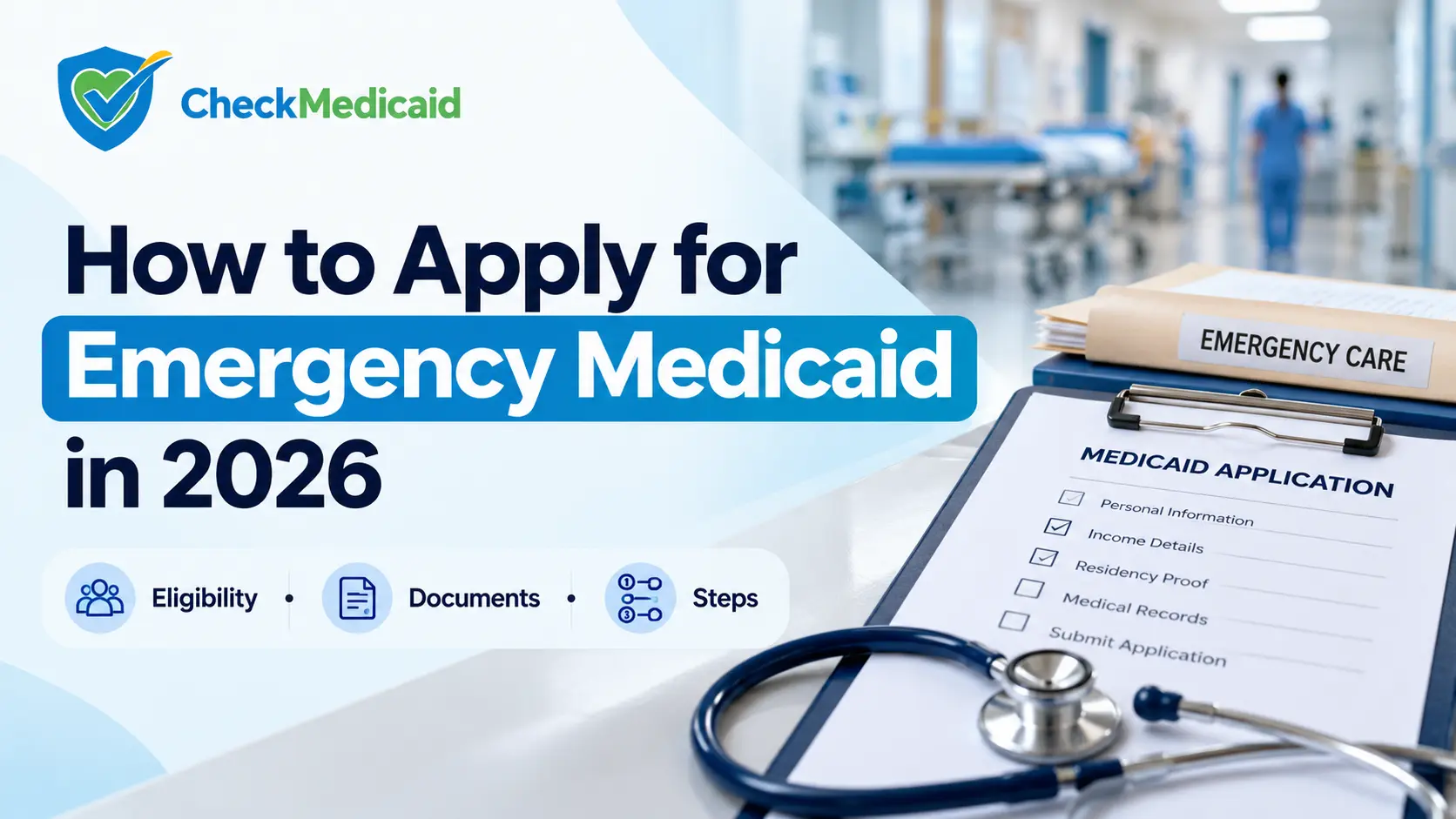
To apply for Emergency Medicaid, contact the hospital’s Medicaid enrollment specialist or your state Medicaid agency. Complete the required application, provide requested income and residency information, and submit medical records showing the emergency treatment.
You must meet your state’s applicable Medicaid eligibility rules, and the treatment must qualify as an emergency medical condition. Requirements and covered services vary by state.
Facing an unexpected hospital bill without full health insurance can be stressful. But what if you may qualify for limited Medicaid coverage even when you cannot receive regular Medicaid?
Understanding the application process can help you explore possible assistance and avoid missing important paperwork.
In this guide, we will explain who may qualify, what Emergency Medicaid covers, which documents to prepare, and how to apply step by step.
Table of Contents
What Is Emergency Medicaid and How Does It Work?
Emergency Medicaid is a limited Medicaid benefit that can pay for qualifying emergency medical services for certain people who meet their state’s Medicaid requirements but are ineligible for full Medicaid because of immigration status.
Under Section 1903(v) of the Social Security Act, qualifying emergency treatment may receive Medicaid funding when the applicant meets the other applicable eligibility requirements.
The federal definition includes emergency labor and delivery and focuses on acute symptoms that could seriously endanger health or impair bodily functions without immediate medical attention.
Learn more in the official Social Security Act, Section 1903.
Who Qualifies for Emergency Medicaid in 2026?
Eligibility depends on your state, income, residency, immigration circumstances, and medical condition. Generally, applicants must meet the following requirements:
- Immigration eligibility: Your status prevents you from receiving full Medicaid, and your circumstances fall within the applicable emergency coverage rules.
- Income requirements: Your income must meet the rules for the relevant Medicaid eligibility category in your state.
- State residency: You must satisfy the state’s residency requirements.
- Qualifying emergency: The medical condition must meet the legal definition of an emergency medical condition.
- Other eligibility conditions: Additional program rules may apply to your circumstances.
Undocumented immigrants may qualify for Emergency Medicaid if they meet the applicable requirements. However, immigration status alone does not establish eligibility, and not every hospital visit qualifies.
If you may qualify for regular Medicaid instead, start with our Medicaid eligibility guide.
What Medical Services Does Emergency Medicaid Cover?
Emergency Medicaid generally covers services necessary to treat a qualifying emergency medical condition. Depending on the circumstances and state rules, covered treatment may include:
- Emergency room evaluation and treatment.
- Hospital care needed to treat the emergency.
- Emergency surgery.
- Labor and delivery when the applicable requirements are met.
- Diagnostic tests, imaging, and laboratory services related to the emergency.
- Certain medications and other services directly associated with emergency treatment.
Important: Do not assume that every service provided during a hospital visit will be covered. The state Medicaid agency determines whether the treatment meets the program’s requirements.
What Does Emergency Medicaid Usually Not Cover?
Routine checkups, preventive services, planned procedures, unrelated prescriptions, and ongoing treatment after an emergency may fall outside Emergency Medicaid coverage. Certain services may have different rules, so confirm coverage with your state agency and hospital billing department.
How to Apply for Emergency Medicaid Step by Step
If you need assistance with an emergency hospital bill, follow these steps.
1. Contact the Hospital’s Financial Assistance Team
Ask for the hospital’s Medicaid enrollment specialist, financial counselor, or social worker. Explain that you want to be assessed for Emergency Medicaid. They can tell you whether the hospital helps with applications and which forms are required.
2. Ask Which Application You Need
Some hospitals help patients submit applications, while others direct applicants to the state Medicaid agency. Confirm the correct process for your state and medical situation.
You can also find your state’s official application contact through Medicaid.gov’s state agency directory.
3. Gather Your Supporting Documents
Prepare the documents requested by the hospital or Medicaid agency. Requirements vary, but you may be asked for:
- Recent pay stubs or other proof of income.
- A lease, utility bill, or other proof of state residency.
- Identification, where required.
- Hospital records, discharge papers, or medical bills.
- Information about the dates and nature of the emergency treatment.
Ask the agency whether immigration documents are required for your particular application. Do not assume every state follows the same documentation process.
4. Submit the Application
Complete all required sections and submit the application through the approved channel. Keep a copy of your paperwork and note the submission date or confirmation number.
5. Follow Up on Your Application
Ask how you will receive the decision and whether additional documents are needed. Respond promptly to requests from the Medicaid agency or hospital.
If you have already received treatment, ask whether retroactive coverage is available for your case. Do not assume a particular deadline or that all earlier bills will automatically be paid.
Does Emergency Medicaid Cover Pregnancy and Childbirth?
Emergency Medicaid can cover qualifying emergency labor and delivery. However, prenatal visits and postpartum services may be subject to additional rules, and coverage can differ by state and program.
If you are pregnant, ask your hospital or state Medicaid agency whether you qualify for Emergency Medicaid or another pregnancy-related coverage program. Some states offer separate programs that may provide broader pregnancy benefits.
For general information, read our pregnancy Medicaid application guide.
What Changed Under the 2026 Federal Medicaid Rules?
Federal legislation changed certain immigration-related rules governing federal Medicaid funding beginning October 1, 2026. These changes affect eligibility for full Medicaid benefits for some noncitizen groups, subject to exceptions.
They did not simply eliminate Emergency Medicaid. The federal law continues to provide for qualifying emergency medical services under Section 1903(v), although funding rules and implementation details can affect states.
Because the impact depends on immigration category and state policy, applicants should verify their circumstances with the state Medicaid agency. See the official CMS guidance on noncitizen Medicaid eligibility.
Does Emergency Medicaid Guarantee That Your Hospital Bill Will Be Paid?
No. Applying does not guarantee approval or payment of the entire bill. The agency must determine whether you meet the applicable eligibility conditions and whether the services qualify for coverage.
Ask the hospital billing department to review your account for possible Medicaid assistance and other financial assistance programs. If your application is denied, request the written reason and ask about appeal rights and deadlines.
You can also explore our Medicaid income limits by state guide for general eligibility information.
Take the Next Step Toward Medical Bill Assistance
An unexpected medical emergency can create financial pressure, especially when you do not have comprehensive health coverage. Emergency Medicaid may help eligible applicants with qualifying treatment, but the outcome depends on the applicable rules and the services received.
If you have an outstanding hospital bill, contact the hospital’s financial assistance team and your state Medicaid agency as soon as possible. Keep your records organized, ask about the correct application process, and confirm whether your treatment may qualify.
For more guidance, explore CheckMedicaid at CheckMedicaid.com and use its educational resources to understand your possible Medicaid options. Always confirm eligibility and coverage directly with your state Medicaid agency.
Frequently Asked Questions
Can undocumented immigrants apply for Emergency Medicaid?
Yes, they may qualify if they meet the state’s applicable Medicaid requirements and receive treatment for a qualifying emergency. Approval is not automatic.
Can I apply after leaving the hospital?
You may be able to apply after receiving treatment. Contact the hospital or state Medicaid agency promptly and ask about the application process and any retroactive coverage rules.
Does Emergency Medicaid pay every emergency room bill?
No. Payment depends on eligibility and whether the services meet the program’s coverage requirements. Unrelated or noncovered services may remain the patient’s responsibility.
Is Emergency Medicaid available in every state?
Federal law provides for emergency medical coverage under specified conditions. However, application procedures, eligibility determinations, and related state-funded benefits can differ.
What should I do if my application is denied?
Ask for the written decision, review the stated reason, and check the appeal instructions and deadline. A hospital financial counselor or qualified benefits adviser may help you understand the next steps.