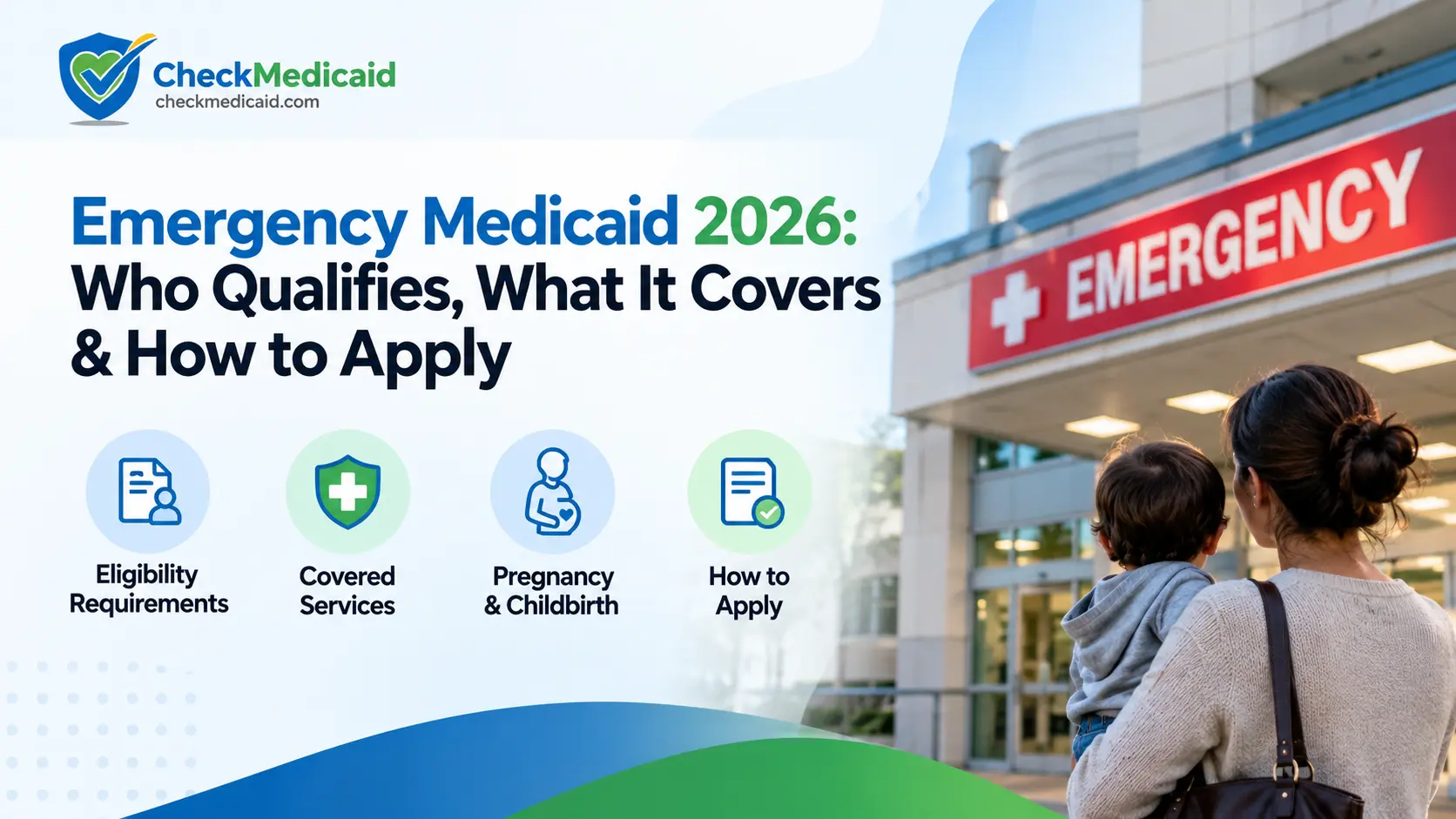
Emergency Medicaid 2026 helps eligible people receive coverage for emergency medical conditions when they cannot qualify for full Medicaid benefits because of their immigration status. To qualify, applicants generally need to meet their state’s Medicaid income and residency requirements, along with other applicable rules. Coverage may include emergency hospital treatment, emergency surgery, and delivery when covered under state Medicaid rules. Eligibility and covered services can vary by state.
Eligibility depends on financial and residency requirements, the medical condition, and applicable state rules.
What happens if you need emergency treatment but do not qualify for regular Medicaid? You may still have a coverage option.
This guide explains Emergency Medicaid eligibility, covered services, pregnancy-related care, and the application process. In this blog, we’ll also explain the 2026 policy changes and where to find official state guidance.
Table of Contents
What Is Emergency Medicaid?
Emergency Medicaid is a limited form of Medicaid coverage for qualifying emergency medical treatment. It is available to certain noncitizens who meet the other applicable Medicaid requirements but are ineligible for full benefits because of immigration status.
It is not comprehensive health insurance. Coverage focuses on treatment for a qualifying emergency medical condition rather than routine healthcare.
The Centers for Medicare & Medicaid Services (CMS) explains the federal rules governing emergency medical services for people who are ineligible for full Medicaid benefits.
Who Qualifies for Emergency Medicaid in 2026?
To qualify, an applicant must meet the applicable Medicaid requirements in their state and need treatment for a qualifying emergency medical condition.
The main requirements include:
- Immigration status: Certain undocumented immigrants and noncitizens who cannot receive full Medicaid because of their immigration status may qualify.
- Income and financial eligibility: Applicants must meet the financial requirements for the applicable Medicaid eligibility category.
- State residency: Applicants must satisfy the state’s residency requirements.
- Emergency treatment: The medical condition must meet the program’s definition of an emergency medical condition.
These rules are assessed together. Having a medical emergency does not automatically mean Medicaid will pay the entire bill.
If you are unsure about your financial eligibility, start with CheckMedicaid’s Medicaid eligibility guide and Medicaid income limits by state. Use these resources for general guidance, then confirm your eligibility with the state agency.
What Does Emergency Medicaid 2026 Cover?
Emergency Medicaid covers qualifying treatment for an emergency medical condition. Federal law defines this in terms of acute symptoms that could seriously threaten a person’s health, impair bodily functions, or cause serious dysfunction of an organ or body part without immediate medical attention.
Depending on the circumstances, covered services may include:
- Emergency room evaluation and treatment
- Hospital admission and care needed to treat the emergency
- Emergency surgery
- Labor and delivery when the applicable requirements are met
- Tests, imaging, and other services directly related to treating the emergency
Routine checkups, preventive care, and ongoing treatment for chronic conditions are not automatically covered under emergency-only benefits. The specific service and medical circumstances matter.
Do not assume every hospital bill is covered. Ask the hospital’s billing or Medicaid enrollment team whether the treatment meets the state’s emergency coverage requirements.
Does Emergency Medicaid Cover Pregnancy and Childbirth?
Emergency Medicaid can cover qualifying labor and delivery for eligible applicants. However, pregnancy-related coverage should not be treated as identical in every state or situation.
Routine prenatal visits and postpartum care may be subject to different eligibility and coverage rules. Some states also provide additional pregnancy-related Medicaid benefits under separate programs.
If you are pregnant and need coverage, contact the hospital’s financial assistance team and your state Medicaid agency. Ask specifically about labor and delivery, prenatal appointments, and postpartum services rather than assuming one approval covers everything.
How to Apply for Emergency Medicaid
Need help with a hospital bill? Start with the facility that treated you or the Medicaid agency in your state.
- Contact the hospital. Ask for its Medicaid enrollment specialist, financial assistance department, or social worker.
- Ask about emergency coverage. Explain that you want to be assessed for Emergency Medicaid and ask which application process applies.
- Prepare your documents. The agency may request proof of income, state residency, identity, and medical treatment. Requirements vary, so ask before submitting paperwork.
- Complete the application. Follow the instructions from the hospital or state Medicaid agency. Do not assume the hospital has completed the application for you.
- Check the decision. Ask how to confirm your application status and whether additional documents are needed.
You can also review CheckMedicaid’s guide to applying for Medicaid. For a general estimate of eligibility, the Medicaid eligibility calculator is another starting point, but it does not replace an official decision.
What Changed in Emergency Medicaid Rules for 2026?
Federal Medicaid eligibility rules for certain noncitizens changed on October 1, 2026. The changes affect eligibility for full Medicaid benefits for some immigration categories; the exact impact depends on the person’s status and circumstances.
Emergency medical services are governed by a separate federal provision. CMS continues to publish guidance on how that provision applies to emergency treatment and Medicaid payments. Read the Nebraska DHHS guidance on noncitizen Medicaid eligibility for an official explanation of the October 2026 changes, and confirm how the rules apply in your own state.
Do not assume that losing eligibility for full Medicaid automatically answers every question about emergency coverage. Ask your state agency to review your specific situation.
Emergency Medicaid vs. EMTALA: What’s the Difference?
Emergency Medicaid and EMTALA serve different purposes.
| Emergency Medicaid | EMTALA |
| A Medicaid payment pathway for qualifying emergency services | A federal law governing emergency screening and stabilizing treatment at covered hospitals |
| Requires applicable Medicaid eligibility conditions | Emergency screening and stabilization protections do not depend on insurance status |
| May pay for covered treatment when eligibility requirements are met | Does not itself provide health insurance or guarantee that the bill will be paid |
If you need emergency medical care, do not delay seeking treatment while trying to establish Medicaid eligibility. Ask the hospital about financial assistance and the appropriate coverage application process.
Facing an Emergency Medical Bill? Check Your Medicaid Options Before Giving Up
If you cannot qualify for full Medicaid because of your immigration status, Emergency Medicaid 2026 may offer a way to pay for eligible emergency treatment if you meet your state’s requirements. But don’t assume every hospital service is covered or that approval is automatic.
Start by contacting the hospital’s billing or Medicaid enrollment team. Ask whether your treatment qualifies, which documents you need, and how to complete the application.
You can also explore the eligibility resources on CheckMedicaid.com and confirm the latest rules with your state Medicaid agency.
Don’t let confusion about eligibility stop you from checking your options. Get the facts, ask the right questions, and take the next step toward understanding your coverage.
Frequently Asked Questions
Can undocumented immigrants qualify for Emergency Medicaid?
Yes. Some undocumented immigrants qualify if they meet the applicable state Medicaid requirements and need treatment for a qualifying emergency medical condition.
Does Emergency Medicaid cover all hospital bills?
No. Only services that meet the program’s coverage rules qualify. Routine care and unrelated services are not automatically covered.
Is Emergency Medicaid available in every state?
Federal law requires states to cover qualifying emergency medical services for otherwise-eligible noncitizens who cannot receive full Medicaid because of immigration status. Application procedures and implementation details vary by state.