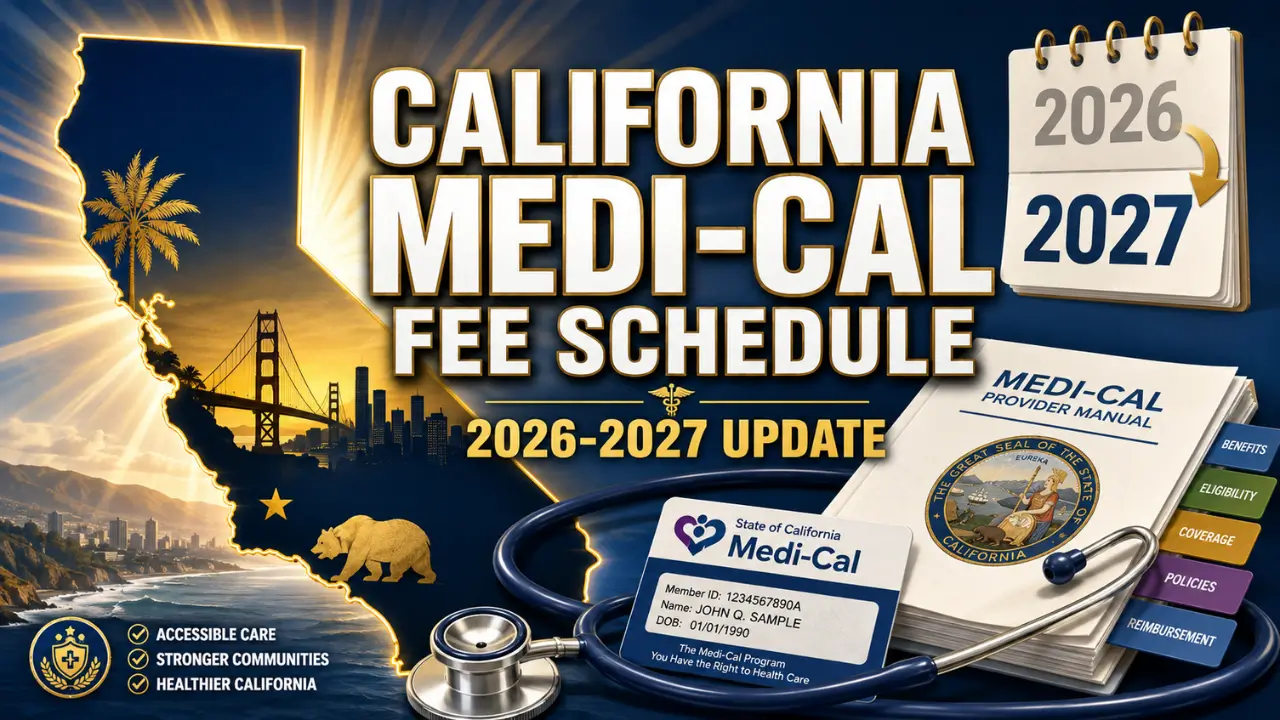
California does not have one single 2027 Medi-Cal fee schedule. Instead, the state’s Department of Health Care Services (DHCS) publishes separate rate schedules for behavioral health, dental, medical equipment, and other services.
Most current rates run under Fiscal Year 2026–27, from July 1, 2026 through June 30, 2027, with several major policy changes set to begin in 2027.
This guide breaks down what’s confirmed, what’s still pending, and how these changes may affect your coverage.
Quick Summary:
- Behavioral health provider rates are set for FY 2026–27.
- Durable medical equipment (DMEPOS) rates updated January 1, 2026.
- Proposition 35 is raising primary care and dental funding.
- Major benefit and premium changes begin in 2027.
- Use our Medicaid Eligibility calculator in 2026 to check your status today.
What Is the Medi-Cal Fee Schedule?
A fee schedule is a list. It shows how much Medi-Cal pays providers for each service. Doctors, dentists, and clinics use it to bill Medi-Cal correctly.
California does not use one master list. Instead, DHCS keeps separate schedules by service type. This includes behavioral health, dental, equipment, and managed care rates.
California Medi-Cal Fee Schedule FY 2026–2027
DHCS has confirmed several rate updates for the current fiscal year. These rates apply from July 1, 2026 through June 30, 2027. Some will carry into part of calendar year 2027.
Behavioral Health Rates
DHCS has published reimbursement rates for County Mental Health Plans for FY 2026–27. These rates use a county-wide average of direct and indirect costs.
The schedule covers outpatient, mobile crisis, day treatment, and psychiatric inpatient services.
Drug Medi-Cal Organized Delivery System (DMC-ODS) rates are also included for withdrawal management and outpatient treatment.
These are state-to-county reimbursement rates. Counties and health plans negotiate their own rates with individual providers. They are not required to match the state schedule exactly.
Durable Medical Equipment (DMEPOS)
Rates for prosthetics, orthotics, and medical supplies were updated on January 1, 2026. These rates align with the 2026 Medicare fee schedule.
They typically stay in place until the next annual update in January 2027.
Long-Term Care & Skilled Nursing
The Skilled Nursing Facility Workforce Standards Program has opened its opt-in period for Calendar Year 2027. Facilities that choose to participate may see funding tied to workforce staffing standards.
Proposition 35 Rate Increases (2026–2027)
Voters approved Proposition 35 in November 2024. It requires that revenue from the state’s managed care organization (MCO) tax be used to permanently raise provider rates.
Primary & Specialty Care Rate Targets
Prop 35 sets a new rate floor. Primary care, obstetric, and non-specialty mental health services must be paid at least 87.5% of the Medicare fee schedule. DHCS created supplemental payment increases that were effective from July 1, 2026 through December 31, 2026. Whether these enhanced rates continue into 2027 depends on federal approval of a new MCO tax structure starting January 1, 2027.
Dental Funding Boost for 2027
Starting in 2027, Prop 35 requires a 10% increase in the total annual budget for Medi-Cal dental services. This adds roughly $300 million in dental funding statewide.
Major Medi-Cal Policy Changes Coming in 2027
Several structural changes will affect billing, coverage, and member costs starting in 2027. These go beyond routine rate updates.
MCO Tax Renewal (January 1, 2027)
The current MCO tax expires December 31, 2026. A new tax structure, designed to conform with federal law, is proposed to begin January 1, 2027. This tax funds the ongoing Prop 35 rate increases. If federal approval is delayed, some rate increases could be affected.
Dental Benefit Cuts & FFS Transition (January 1, 2027)
Starting January 1, 2027, adults with unsatisfactory immigration status will lose full dental benefits. This includes some undocumented adults and certain green card holders.
Some of these members will also move from Managed Care Plans to Fee-For-Service (FFS) Medi-Cal. DHCS is clear that “Fee-for-Service” does not mean the member pays. Medi-Cal still covers the cost of care.
Medi-Cal will also limit retroactive medical bill coverage starting January 1, 2027. Adults ages 19–64 without children will get one month of retroactive coverage. Everyone else will get two months.
New Monthly Premiums (July 1, 2027)
Starting July 1, 2027, adults ages 19–59 with unsatisfactory immigration status will need to pay a monthly premium. Reported figures range from $30 to $50 per month. This premium keeps their full-scope Medi-Cal coverage active.
DHCS has also confirmed that, from July 1, 2027, the Medi-Cal asset limit for affected older adults and people with disabilities will rise. The new limit is $21,000 for one person and $31,000 for two people. It increases by $1,550 for each added household member, up to 10 people.
How Medicare Rates Affect Your Medi-Cal Fee Schedule
Medi-Cal’s Prop 35 rate floor is tied directly to Medicare. This makes the federal Medicare Physician Fee Schedule (PFS) an important baseline to watch.
CMS released its proposed 2027 Medicare Physician Fee Schedule rule on July 14, 2026. The proposed 2027 Medicare conversion factor is projected to decrease. If finalized, this could lower the “87.5% of Medicare” floor that Medi-Cal rates are pegged to, unless the state steps in to hold rates flat.
Medi-Cal Eligibility and Income Limits for 2026–2027
Fee schedule changes affect providers and payments. But your eligibility depends on separate rules, including income and household size. For a full state-by-state breakdown, see Medicaid Income Limits by State in 2026.
Eligibility categories include income-based Medi-Cal (using Modified Adjusted Gross Income), asset-based programs for seniors and people with disabilities, and special categories tied to immigration status. Some rules are shifting for 2027, including new asset limits and premium requirements described above. To understand which category applies to you, review Medicaid Eligibility in 2026 before you apply.
How to Apply for Medi-Cal in California
- Gather your documents. You’ll need proof of income, household size, and residency.
- Apply online through Covered California or BenefitsCal.
- Or apply in person at your county social services office.
- Or apply by phone with your county Medi-Cal office.
- Submit your application and wait for review.
- Respond quickly to any requests for more information.
What Happens After You Apply?
County caseworkers review most applications within 45 days. Applications based on disability may take up to 90 days. You’ll get a notice by mail with the decision.
If approved, you’ll receive a Medi-Cal card. Coverage often starts the month you applied, sometimes earlier. If denied, you have the right to appeal.
FAQ
Q: Is there one official 2027 Medi-Cal fee schedule?
A: No. DHCS publishes separate schedules by category, such as behavioral health, dental, and DMEPOS. There is no single statewide 2027 schedule covering all medical services yet, though several category-specific updates are already confirmed.
Q: When do Medi-Cal premiums start for immigrant adults?
A: Starting July 1, 2027, some adults ages 19–59 with unsatisfactory immigration status will pay a monthly premium, reportedly between $30 and $50, to keep full-scope Medi-Cal coverage.
Q: Will Medi-Cal dental coverage change in 2027?
A: Yes. Starting January 1, 2027, some adults will lose full dental benefits based on immigration status. At the same time, Prop 35 requires a 10% overall increase in the dental services budget statewide.
Q: How does Proposition 35 affect provider rates?
A: Prop 35 requires MCO tax revenue to permanently raise rates. Primary care, obstetric, and non-specialty mental health services must reach at least 87.5% of the Medicare fee schedule, funded through supplemental payments.
Q: What is the new Medi-Cal asset limit for 2027?
A: Starting July 1, 2027, the asset limit rises to $21,000 for one person and $31,000 for two people, increasing by $1,550 for each additional household member, up to 10 people.
Q: Why does the Medicare fee schedule matter for Medi-Cal?
A: Because Prop 35 ties Medi-Cal’s rate floor to Medicare, changes to the federal Medicare conversion factor can raise or lower the minimum Medi-Cal must pay for certain services.
Written & Reviewed by Akash Biswas, MSW | Former Medicaid Caseworker Trainer | Verified against official Medicaid.gov and California DHCS guidelines | Last Updated: August 2026
Sources
- California DHCS, “Medi-Cal Behavioral Health Fee Schedules Fiscal Year 2026–27”
- California DHCS, “Medi-Cal Changes”
- California Department of Health Care Services, “Rates”
Additional figures referenced from DHCS FY 2026-27 Budget Highlights, CMS’s proposed CY 2027 Physician Fee Schedule rule, and California Dental Association analysis of Proposition 35.
Disclaimer: CheckMedicaid.com is not affiliated with any government agency. This content is for educational purposes only. For official eligibility and billing information, contact your county Medi-Cal office or visit Medicaid.gov.
A full 2027 fee schedule will be published once DHCS releases FY 2027–28 rates. Check back for our upcoming Medicaid Fee Schedule FY 2027 guide when new rates are confirmed.