Last Updated: February 2026 | Source: California Department of Health Care Services (DHCS) & HealthCare.gov
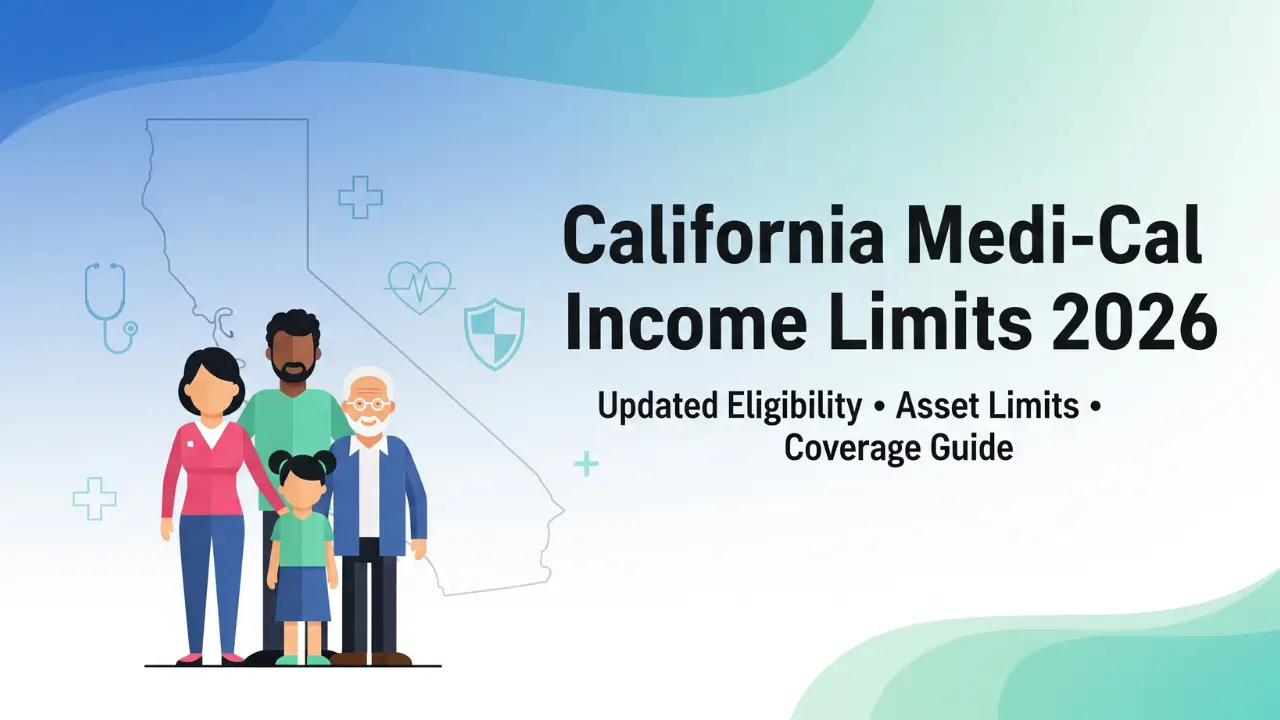
In 2026, most single adults qualify for California Medi-Cal if they earn under $22,025 per year ($1,836/month).
This is based on 138% of the Federal Poverty Level (FPL). Children and disabled Californians may qualify at much higher income levels.
Quick Answer Summary:
- 🟢 Single adults qualify with income under $22,025/year ($1,836/month) in 2026
- 🟢 A family of four qualifies under $45,540/year for adult coverage
- 🟢 Children ages 0–18 qualify at a much higher limit — up to $87,780/year for a family of four
- 🟢 Seniors and disabled applicants now face a $130,000 asset limit, reinstated January 1, 2026
- 🟢 Earning too much for Medi-Cal routes you to Covered California with premiums capped at 8.5% of your income
- 🟢 Mixed-status households can have kids on Medi-Cal while parents use Covered California at the same time
What Is Medi-Cal and Who Does It Cover?
Medi-Cal is California’s free or low-cost health coverage program. It is the state’s version of the federal Medicaid program.
It covers doctor visits, hospital care, prescriptions, mental health services, and more.
Medi-Cal serves millions of Californians, including low-income adults, children, seniors, pregnant individuals, and people with disabilities.
Eligibility is mostly based on your household income compared to the Federal Poverty Level (FPL).
To understand how California fits into the bigger picture, see our full guide on Medicaid income limits by state in 2026 for a side-by-side comparison.
2026 Federal Poverty Level (FPL) Baseline
Before looking at income limits, it helps to understand the FPL. The 2026 Federal Poverty Level for a single person is $15,960 per year.
California uses this number to set Medi-Cal thresholds as a percentage.
| FPL % | Who It Applies To |
|---|---|
| 138% FPL | Standard adults (ages 19–64) |
| 250% FPL | Working Disabled Program |
| 266% FPL | Children ages 0–18 |
All income limits in this article are based on the 2026 FPL published by the U.S. Department of Health and Human Services.
🔗 Official Source: 2026 Federal Poverty Guidelines – HealthCare.gov
2026 Medi-Cal Annual Income Limits by Household Size
California Medi-Cal uses three main income tracks depending on who is applying.
Adults follow the 138% FPL rule, children follow the 266% FPL rule, and working disabled adults follow the 250% FPL rule.
The table below shows all three side by side so you can quickly find your number.
Annual Income Limits Table (2026)
| Household Size | Adult Limit (138% FPL) | Child Limit (266% FPL) | Working Disabled (250% FPL) |
|---|---|---|---|
| 1 Person | $22,025 | $42,454 | $39,900 |
| 2 People | $29,864 | $57,563 | $54,100 |
| 3 People | $37,702 | $72,672 | $68,300 |
| 4 People | $45,540 | $87,780 | $82,500 |
| 5 People | $53,379 | $102,889 | $96,700 |
| 6 People | $61,217 | $117,998 | $110,900 |
| Each Add. Person | +$7,838 | +$15,109 | +$14,200 |
Key Takeaway: Children qualify at more than double the adult income limit. A family of four can earn up to $87,780 and still get Medi-Cal for their kids.
2026 Medi-Cal Monthly Income Limits
Most county offices check your current monthly income, not your annual total. Below are the key monthly thresholds you need to know for 2026.
Monthly Breakdown by Common Household Size
| Household | Monthly Limit (Adults) | Monthly Limit (Children) |
|---|---|---|
| 1 Person | $1,836 / mo | $3,538 / mo |
| 2 People | $2,489 / mo | $4,797 / mo |
| 4 People | $3,795 / mo | $7,315 / mo |
What These Numbers Mean for You
Single Adult (1 Person): If you earn less than $1,836/month, you qualify for full-scope Medi-Cal with no monthly premium.
Couple (2 People): If your combined household income is under $2,489/month, both adults may qualify.
Family of Four: Parents need to stay under $3,795/month for adult coverage. But your children qualify up to $7,315/month — a much higher bar.
Critical 2026 Medi-Cal Updates You Must Know
2026 brings three major changes to Medi-Cal that could affect your eligibility or coverage. These updates are some of the biggest in years, so read carefully before you apply.
1. Asset Limits Are Back for Non-MAGI Applicants
Effective January 1, 2026, California has reinstated the asset test for Non-MAGI Medi-Cal. This applies to people who are aged 65+, blind, or disabled.
This reverses the previous “asset elimination” policy from prior years.
| Who It Applies To | Asset Limit |
|---|---|
| Individual | $130,000 |
| Couple | $195,000 |
What counts as an asset? Cash, bank accounts, stocks, bonds, and second properties.
What is exempt?
- ✅ Your primary home
- ✅ One vehicle
- ✅ Household goods and personal belongings
⚠️ Important: This asset test does NOT apply to standard MAGI Medi-Cal (adults 19–64 and children). It only affects those in the Aged, Blind, and Disabled categories.
For more detail on how these costs are calculated, review the California Medicaid fee schedule in 2026 to understand what services are covered and at what reimbursement rates.
2. Immigration Enrollment Freeze for Certain Adults
Starting January 1, 2026, new enrollments for certain undocumented adults ages 26–49 may be frozen or restricted for full-scope Medi-Cal.
Who is still protected:
- ✅ Children ages 0–18 (regardless of immigration status)
- ✅ Pregnant individuals (all income-eligible)
- ✅ Adults already enrolled before the cutoff date
Who may be affected:
- ❌ New applicants ages 26–49 without satisfactory immigration status
If you were already enrolled before the cutoff, you typically keep your coverage. New applicants in this age group may face barriers and should contact their county office directly.
3. Covered California and the Subsidy Cliff
If your income is above the Medi-Cal limit, you move to Covered California — the state’s health insurance marketplace.
In 2026, the “subsidy cliff” is removed. This means there is no hard income cap on financial help. Instead, you will never pay more than roughly 8.5% of your income on monthly premiums, no matter how much you earn.
This is a major benefit for middle-income Californians who used to fall into a coverage gap.
MAGI vs. Non-MAGI Medi-Cal: What Is the Difference?
Understanding these two program types is key to knowing which rules apply to you. Most working-age Californians fall under MAGI, while seniors and disabled individuals fall under Non-MAGI. The rules are very different between the two.
MAGI Medi-Cal (Most Common)
MAGI stands for Modified Adjusted Gross Income.
- Applies to: Adults 19–64, children, pregnant individuals
- Eligibility based on: Income only
- No asset test applies
- Uses tax-based income rules
Non-MAGI Medi-Cal
- Applies to: Adults 65+, blind individuals, disabled individuals
- Eligibility based on: Both income AND assets
- Subject to the new $130,000 asset limit (reinstated in 2026)
- More complex application process
To learn more about who qualifies and how to apply, visit our detailed breakdown of California Medi-Cal eligibility in 2026.
Mixed-Status Households: Can Part of Your Family Still Qualify?
Yes — and this is one of the most misunderstood parts of Medi-Cal. Different members of the same household can qualify for different programs at the same time.
Real Example: Family of 4 Earning $60,000/Year
| Family Member | Income Limit | Do They Qualify? |
|---|---|---|
| Parent 1 | $45,540 (adult limit) | ❌ No — income too high |
| Parent 2 | $45,540 (adult limit) | ❌ No — income too high |
| Child 1 | $87,780 (child limit) | ✅ Yes — qualifies for Medi-Cal |
| Child 2 | $87,780 (child limit) | ✅ Yes — qualifies for Medi-Cal |
What happens to the parents? They apply for Covered California and get subsidized private insurance. They pay no more than 8.5% of their income on premiums.
This means a family earning $60,000 can have the kids on free Medi-Cal while the parents get help on Covered California — all at the same time.
Medi-Cal vs. Covered California: Which One Do You Get?
Your income decides which program you land in. Think of it as two lanes on the same road — both lead to health coverage, just through different paths.
| Income Level | Program | Cost to You |
|---|---|---|
| Below 138% FPL | Medi-Cal | Free (no premium) |
| 138%–400%+ FPL | Covered California | Subsidized (capped at 8.5% of income) |
| Above limits | Covered California | Still eligible for help |
How to Apply for Medi-Cal in 2026
Applying is easier than ever. You can apply online, by phone, by mail, or in person at your county office.
To understand how Medi-Cal reimbursement works for your care providers, see our guide on the Medicaid fee schedule in 2026 for the national context.
Step-by-Step Application Process
- Visit BenefitsCal.com — the official California benefits portal
- Create an account and start a new application
- Enter your household size and monthly income
- Upload documents (ID, proof of income, residency)
- Submit and wait — most decisions take 45 days (or 90 days for Non-MAGI)
- Get your Medi-Cal card and pick a managed care plan
🔗 Apply Now: BenefitsCal.com – Official California Benefits Portal
Documents You Will Need
- ✅ Photo ID or passport
- ✅ Proof of income (pay stubs, tax return, employer letter)
- ✅ Proof of California residency (utility bill, lease)
- ✅ Social Security number (if applicable)
- ✅ Immigration documents (if applicable)
Do Not Assume You Are Ineligible
Many people think they earn too much for Medi-Cal. But certain deductions can lower your countable income, bringing you under the limit.
Deductions may include:
- Self-employment business expenses
- Certain childcare costs
- Medical expenses (for Non-MAGI applicants)
- Alimony paid
Always apply and let the county determine your eligibility. Never self-disqualify based on estimates alone.
Frequently Asked Questions (FAQs)
1. What is the Medi-Cal income limit for a single person in California in 2026?
For a single adult ages 19–64, the 2026 Medi-Cal income limit is $22,025 per year or $1,836 per month. This is based on 138% of the Federal Poverty Level. If you earn less, you qualify for free, full-scope coverage with no premium.
2. Does Medi-Cal check your bank account or savings in 2026?
Only for Non-MAGI applicants (aged 65+, blind, or disabled). As of January 1, 2026, the asset limit is $130,000 for an individual and $195,000 for a couple. Standard adult MAGI Medi-Cal has no asset test — your savings do not count.
3. Can my children qualify for Medi-Cal even if I make too much?
Yes. Children ages 0–18 qualify at 266% FPL, which is nearly double the adult limit. A family of four can earn up to $87,780/year and still get Medi-Cal for their kids, even if the parents do not qualify themselves.
4. What happens if I earn more than the Medi-Cal income limit?
You will be directed to Covered California, the state health insurance marketplace. In 2026, there is no income cliff — you can still get financial help on premiums no matter your income, capped at about 8.5% of your income per month.
5. Are undocumented immigrants eligible for Medi-Cal in 2026?
It depends. Children ages 0–18 and pregnant individuals still qualify regardless of immigration status. However, new applications from undocumented adults ages 26–49 may be frozen or restricted starting January 1, 2026. Those already enrolled typically keep their coverage.
6. How long does Medi-Cal approval take in 2026?
Most MAGI Medi-Cal applications are decided within 45 days of submission. Non-MAGI applications (for aged, blind, or disabled applicants) can take up to 90 days. You can apply online at BenefitsCal.com or visit your local county social services office for faster in-person help.
Summary: 2026 Medi-Cal Income Limits at a Glance
| Category | Annual Limit | Monthly Limit |
|---|---|---|
| Single Adult (138% FPL) | $22,025 | $1,836 |
| Family of 4 – Adults | $45,540 | $3,795 |
| Family of 4 – Children | $87,780 | $7,315 |
| Working Disabled (250%) | $39,900 (single) | $3,325 |
| Asset Limit (Non-MAGI) | $130,000 (individual) | N/A |
This article is for informational purposes only. Always verify your eligibility directly through BenefitsCal.com or your county social services office. Income limits are based on the 2026 Federal Poverty Guidelines.