Many people in Alaska struggle to understand Medicaid income limits, especially when new numbers are released every year.
If you are working, self-employed, retired, pregnant, disabled, or supporting a family, even a small change in income rules can determine whether you qualify for healthcare coverage or not.
In 2026, Alaska Medicaid income limits were updated again based on federal guidelines. These updates affect adults, families with children, pregnant women, seniors, and people with disabilities.
We explain what changed in 2026, how income limits work, and how they compare to 2025, using clear language that is easy to follow.
What Changed in Alaska Medicaid for 2026
Several important updates took effect in 2026 that directly affect Medicaid eligibility in Alaska:
- Federal Poverty Level (FPL) amounts increased for Alaska due to inflation and cost-of-living adjustments
- Monthly income limits increased slightly for most Medicaid categories
- Long-term care income limits rose due to a higher Federal Benefit Rate (FBR)
- Eligibility thresholds remain category-based (adults, children, pregnant women, elderly, disabled)
These changes matter because Alaska has higher living costs than most states. Even a small increase in income limits can help more residents qualify or stay covered.
Alaska Medicaid Income Limits 2026 (Monthly)
Below are the 2026 Alaska Medicaid income limits, based on household size and eligibility group. These are gross monthly income amounts before taxes.
2026 Income Limits
| Medicaid Category | Single Person | Family of 3 | Income Basis |
| Children (0–18) / Denali KidCare | ~$3,260 | ~$5,570 | 200% FPL |
| Pregnant Women | ~$3,260 | ~$5,570 | 200% FPL |
| Parents / Caretaker Adults | ~$2,163 | ~$3,843 | 138% FPL |
| Expansion Adults (19–64, no kids) | ~$2,163 | ~$3,843 | 138% FPL |
| Aged / Blind / Disabled | ~$1,795 | ~$2,658 | 100% SSI-based |
| Long-Term Care / Nursing Home | ~$2,900–$2,980 | ~$5,800–$5,960 | 300% FBR |
These numbers are guidelines. Actual eligibility may vary slightly depending on how income is counted and the Medicaid program you apply under.
Alaska Medicaid Income Limits 2025 (Comparison)
To help you clearly see the difference, here are the 2025 income limits side-by-side.
2025 Income Limits
| Medicaid Category | Single Person | Family of 3 |
| Children / Denali KidCare | ~$3,260 | ~$5,570 |
| Pregnant Women | ~$3,260 | ~$5,570 |
| Parents / Caretaker Adults | ~$2,163 | ~$2,926 |
| Expansion Adults | ~$2,163 | ~$2,926 |
| Aged / Blind / Disabled | ~$1,795 | ~$2,658 |
| Long-Term Care | ~$2,901 | ~$5,802 |
What this means:
Most categories stayed close to 2025 levels, but family income limits increased slightly in 2026, which may help households with dependents qualify more easily.
What Is Alaska Medicaid Income Eligibility?
Alaska Medicaid income eligibility refers to the maximum amount of money you can earn each month and still qualify for Medicaid coverage.
For most people, Alaska uses Modified Adjusted Gross Income (MAGI) rules. This means:
- Income is counted before taxes
- Most wages, Social Security, disability, and retirement income are included
- Some tax-free income may not be counted
For seniors, people with disabilities, and long-term care applicants, different income and asset rules apply, which are stricter.
Who does Alaska Medicaid apply to
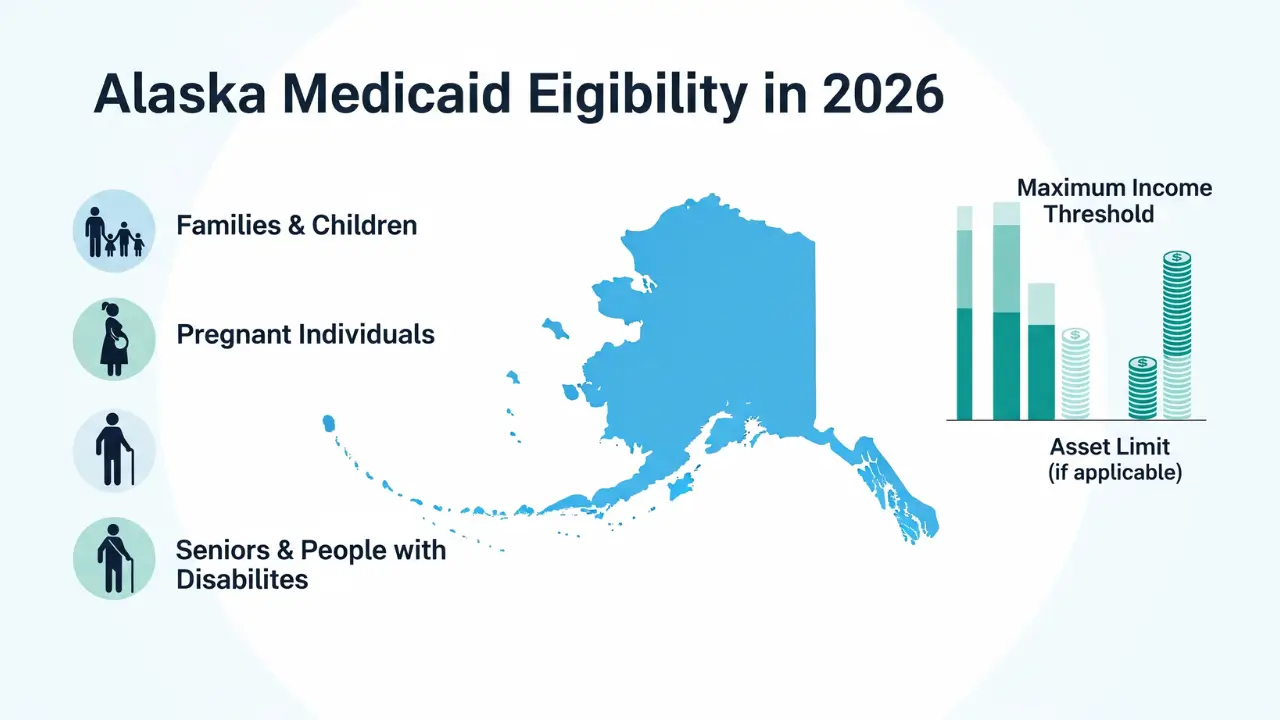
Alaska Medicaid income limits apply to several groups, including:
- Adults ages 19–64 with low income
- Parents or caregivers supporting children
- Pregnant women needing prenatal and postpartum care
- Children under 19 through Denali KidCare
- Seniors age 65 and older
- People who are blind or disabled
- Individuals needing nursing home or long-term care services
Each group has different income limits, which is why understanding your category is important.
Step-by-Step: How to Check If You Qualify
Step 1: Count Your Household Size
Include yourself, your spouse, and any dependents you claim on taxes.
Step 2: Calculate Monthly Gross Income
Add up all income sources:
- Paychecks
- Self-employment income
- Social Security
- Disability benefits
- Pensions or retirement income
Step 3: Match Your Category
Determine if you are applying as:
- An adult
- A parent
- A child
- Pregnant
- Elderly or disabled
Step 4: Compare to 2026 Limits
Use the 2026 income table above for your household size.
Step 5: Apply Through Alaska Medicaid
You can apply online, by mail, or in person through the Alaska Division of Public Assistance.
Important tip: Medicaid eligibility is reviewed monthly. Income changes should be reported quickly to avoid coverage issues.
What Alaska Medicaid Covers vs What It Doesn’t
| Covered Services | Not Typically Covered |
| Doctor visits | Cosmetic procedures |
| Hospital stays | Non-medical travel |
| Prescription drugs | Elective services |
| Mental health care | Most adult dental |
| Pregnancy care | Private nursing care |
Coverage details can vary by plan and eligibility group.
Important Rules, Limits, and Requirements
- You must be a resident of Alaska
- Citizenship or an eligible immigration status is required
- Most income is counted, even if it’s not taxed
- Asset limits apply mainly to seniors and long-term care cases
- Failure to report income changes can affect coverage
Many denials happen simply because income was misreported or misunderstood.
What Happens After You Apply
After submitting your application:
- Processing usually takes 30 to 90 days
- You may be asked to submit proof of income
- Coverage can be retroactive up to 3 months
- If denied, you’ll receive a written explanation and appeal rights
Do not assume a denial is final; many cases are approved after review.
Helpful Tips and Alternatives
- Apply even if you are close to the income limit
- Children often qualify even when adults don’t
- Marketplace health plans may offer subsidies if Medicaid denies you
- Local assistance offices can help with applications
FAQs
1. What is the Alaska Medicaid income limit for adults in 2026?
For most adults, the limit is about 138% of the Federal Poverty Level.
2. Does Alaska still have Medicaid expansion in 2026?
Yes, Medicaid expansion remains in place for low-income adults.
3. Are income limits higher for children?
Yes, children qualify at much higher income levels than adults.
4. Does Social Security count as income?
Yes, most Social Security income is counted.
5. Are assets counted for regular Medicaid?
Not for most adults and children, but they matter for long-term care.
6. Can pregnant women qualify more easily?
Yes, pregnant women have higher income limits.
Final Takeaway
Alaska Medicaid income limits for 2026 reflect updated federal guidelines and cost-of-living adjustments.
While the changes from 2025 are modest, they can make a real difference for families and individuals close to the cutoff.
If you are unsure whether you qualify, applying is often worth it. Understanding your income category, reporting accurately, and following up can help you secure healthcare coverage when you need it most.