Written & Reviewed by Akash Biswas, MSW | Former Medicaid Caseworker Trainer | Verified against official Medicaid.gov and Wisconsin DHS guidelines | Last Updated: March 2026
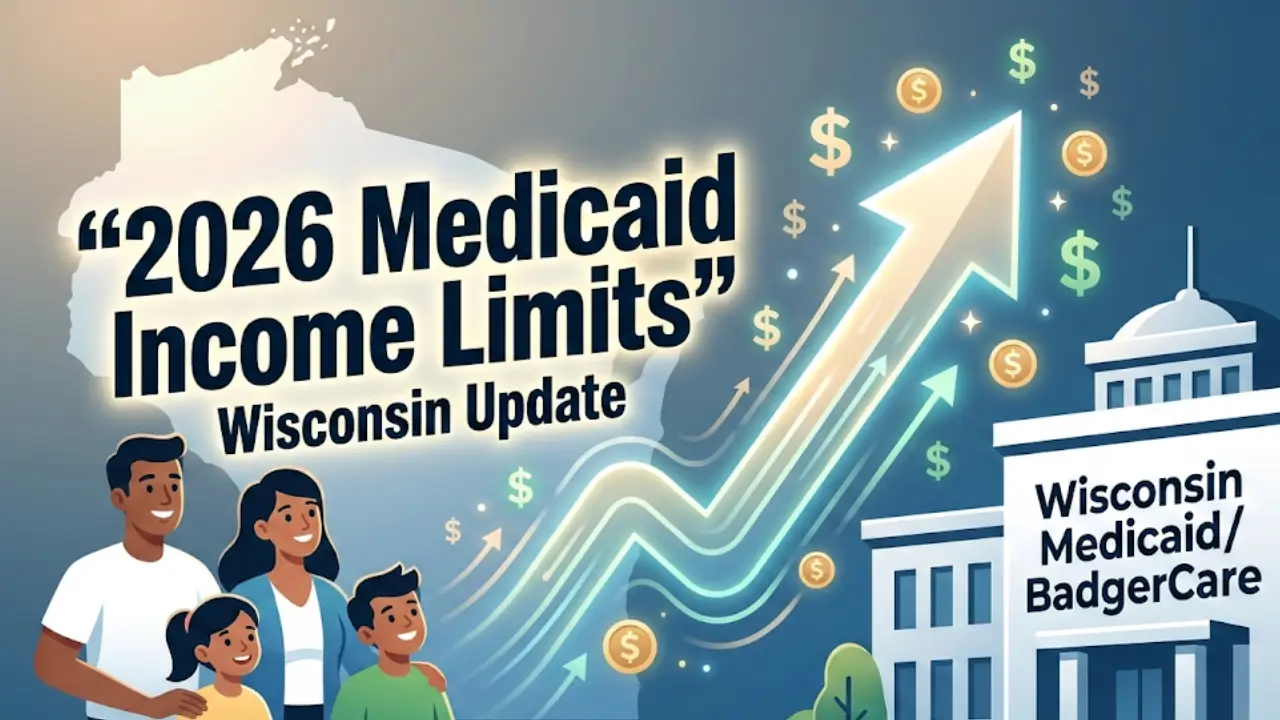
Wisconsin Medicaid income limits for 2026 went up on February 1, 2026.
A single adult can now earn up to $1,330 per month and qualify for BadgerCare Plus. A family of four can earn up to $2,750 per month.
This guide covers every 2026 Wisconsin Medicaid income limit.
You will find charts for adults, children, pregnant women, seniors, and people with disabilities. You will also learn how to apply step by step.
Quick Summary
- BadgerCare Plus covers most adults, children, and pregnant women in Wisconsin.
- A single childless adult qualifies with income at or below $1,330/month (100% FPL).
- Children and pregnant women qualify at much higher income levels — up to 306% FPL.
- Seniors and people with disabilities have different rules that include asset limits.
- Wisconsin uses the ForwardHealth / ACCESS portal for all applications.
- Use our Medicaid eligibility calculator for 2026 to check your eligibility in minutes.
What Is Medicaid in Wisconsin?
Medicaid in Wisconsin is called BadgerCare Plus. It is part of the ForwardHealth system. The Wisconsin Department of Health Services (DHS) runs these programs.
BadgerCare Plus gives free or low-cost health coverage. It helps adults, children, pregnant women, seniors, and people with disabilities. Wisconsin expanded Medicaid under the ACA to cover more adults.
If you want to see how Wisconsin compares to other states, check our guide on Medicaid income limits by state for 2026.
Who Qualifies for Medicaid in Wisconsin in 2026?
Several groups of people can qualify for Medicaid in Wisconsin. Your eligibility depends on your age, income, household size, and health status.
Here are the main groups that may qualify:
Adults Without Children (Childless Adults)
Adults ages 19–64 without dependent children may qualify. Your income must be at or below 100% of the Federal Poverty Level (FPL). There is no asset test for this group.
Parents and Caretakers
Parents and caretaker relatives can qualify at 100% FPL. You must live with and care for a child under 19. Wisconsin uses Modified Adjusted Gross Income (MAGI) rules for this group.
Children (Ages 0–18)
Children have higher income limits than adults. Kids ages 1–5 qualify at 191% FPL. Kids ages 6–18 qualify at 156% FPL. Newborns up to age 1 and pregnant women qualify at 306% FPL.
Pregnant Women
Pregnant women qualify at up to 306% FPL. This is one of the highest limits in BadgerCare Plus. Coverage includes prenatal care, delivery, and postpartum care.
Elderly, Blind, and Disabled (EBD)
Adults age 65 and older or people with disabilities may qualify under EBD Medicaid. This group uses non-MAGI rules. That means both income and assets count. The income limit is tied to the SSI Federal Benefit Rate.
Nursing Home / Institutional Medicaid
People who need long-term care in a nursing facility have a special income limit. In 2026, that limit is $2,982 per month. Asset rules also apply.
To learn more about full Wisconsin Medicaid eligibility in 2026, read our detailed state guide.
Wisconsin Medicaid Income Limits 2026
The 2026 income limits are based on the 2026 Federal Poverty Level published by HHS. These limits took effect February 1, 2026 through ForwardHealth Operations Memo DMS-OPS-26-02.
Wisconsin uses MAGI rules for most people. MAGI counts your Modified Adjusted Gross Income. It does not count assets for adults, children, or pregnant women.
BadgerCare Plus Income Limits for Adults (100% FPL)
| Household Size | Monthly Income Limit | Annual Income Limit |
|---|---|---|
| 1 | $1,330 | $15,960 |
| 2 | $1,803 | $21,640 |
| 3 | $2,277 | $27,320 |
| 4 | $2,750 | $33,000 |
Add about $473 per month for each additional person.
BadgerCare Plus Income Limits for Children
Children qualify at higher FPL levels based on age.
Children Ages 6–18 (156% FPL)
| Household Size | Monthly Income Limit |
|---|---|
| 1 | $2,075 |
| 2 | $2,813 |
| 3 | $3,552 |
| 4 | $4,290 |
Children Ages 1–5 (191% FPL)
| Household Size | Monthly Income Limit |
|---|---|
| 1 | $2,540 |
| 2 | $3,444 |
| 3 | $4,348 |
| 4 | $5,253 |
Infants Under Age 1 and Pregnant Women (306% FPL)
| Household Size | Monthly Income Limit |
|---|---|
| 1 | $4,070 |
| 2 | $5,518 |
| 3 | $6,966 |
| 4 | $8,415 |
Note: Children in households with income between 201% and 306% FPL may need to pay a small monthly premium.
EBD Medicaid Income Limits (Elderly, Blind, Disabled)
| Category | Single Person | Couple |
|---|---|---|
| SSI-Related Income Limit | $994 + $20 disregard = $1,014 | $1,491 + $20 disregard = $1,511 |
| Asset Limit | $2,000 | $3,000 |
People who earn more than these limits may still qualify through a spenddown. A spenddown means you pay the extra income toward medical bills. After that, Medicaid covers the rest.
Nursing Home / Institutional Medicaid Limits
| Category | 2026 Limit |
|---|---|
| Monthly Income Cap (300% SSI FBR) | $2,982 |
| Asset Limit (Single Person) | $2,000 |
| Community Spouse Asset Allowance | Up to $154,140 (subject to 2026 adjustments) |
The nursing home income limit is $2,982 per month in 2026. Even if you qualify, most of your income goes to the facility as patient liability. You keep only a small personal needs allowance.
Spousal impoverishment protections let the at-home spouse keep a share of assets and income. Updated spousal amounts take effect July 1, 2026.
Medicare Savings Programs (MSP) Income Limits
| Program | FPL % | Single Monthly | Couple Monthly |
|---|---|---|---|
| QMB (Qualified Medicare Beneficiary) | 100% | $1,330 | $1,803 |
| SLMB (Specified Low-Income Medicare Beneficiary) | 120% | $1,596 | $2,164 |
| SLMB+ | 135% | $1,796 | $2,435 |
| QDWI (Qualified Disabled Working Individual) | 200% | $2,660 | $3,607 |
Medicare Savings Programs help pay Medicare premiums, deductibles, and coinsurance. QMB pays the most. SLMB and SLMB+ help with Part B premiums. These programs also have asset limits (for example, QMB: $9,950 single / $14,910 couple).
Medicaid Purchase Plan (MAPP)
MAPP helps working people with disabilities buy into Medicaid.
| Category | 2026 Limit |
|---|---|
| Income Limit (250% FPL, single) | $3,325/month |
| Premium Threshold (150% FPL, single) | $1,995/month |
If you earn above 150% FPL, you pay a monthly premium. MAPP has no asset limit for eligibility.
SeniorCare Prescription Drug Program
SeniorCare helps Wisconsin residents age 65 and older pay for prescription drugs. It uses income tiers — not asset limits.
| Level | Single Annual Income | What You Pay |
|---|---|---|
| Level 1 | Up to $24,096 | Small co-pay only (e.g., $5 for generics) |
| Level 2A | $24,097 – $30,120 | $500 annual deductible, then co-pays |
| Level 2B | $30,121 – $36,144 | $850 annual deductible, then co-pays |
| Level 3 | $36,145+ | Spenddown to Level 2B threshold |
Family Planning Only Services (FPOS)
FPOS covers birth control and family planning for people who don’t qualify for full Medicaid. The income limit is 306% FPL ($4,070/month for one person). There is no asset test.
To understand how Medicaid payments work with your providers, visit our guide on the Medicaid fee schedule for 2026.
What Does Medicaid Cover in Wisconsin?
BadgerCare Plus and ForwardHealth cover a wide range of health services. Most covered services have no copay or a very small one.
Here is what Wisconsin Medicaid covers:
- Doctor visits — primary care and specialist visits
- Hospital care — inpatient and outpatient services
- Prescription drugs — generic and brand-name medications
- Mental health services — therapy, counseling, and psychiatric care
- Dental care — preventive, basic, and some major dental work for most groups
- Vision care — eye exams and glasses
- Lab tests and X-rays — diagnostic services
- Prenatal and maternity care — full pregnancy and postpartum coverage
- Emergency services — emergency room visits
- Transportation — rides to medical appointments through Non-Emergency Medical Transportation (NEMT)
- Home and community-based services — for people who need long-term care support at home
- Nursing home care — for those who qualify for institutional Medicaid
Wisconsin Medicaid also covers preventive care like vaccines and screenings at no cost. Children get extra benefits through the Early and Periodic Screening, Diagnostic, and Treatment (EPSDT) program.
How to Apply for Medicaid in Wisconsin
Applying for Medicaid in Wisconsin is free. You can apply online, by phone, by mail, or in person. Here are the steps.
Step 1: Gather Your Documents
Before you start, collect these items:
- Social Security numbers for everyone in your household
- Proof of income (pay stubs, tax returns, or benefit letters)
- Proof of Wisconsin residency (utility bill, lease, or ID)
- Immigration documents (if applicable)
- Information about current health insurance (if any)
Step 2: Apply Online Through ACCESS
Go to ACCESS.wi.gov. This is Wisconsin’s online portal for ForwardHealth programs. Create an account and fill out the application. It takes about 30–45 minutes.
Step 3: Apply by Other Methods
If you prefer not to apply online, you can:
- Call your local county or tribal income maintenance (IM) agency
- Mail a paper application to your local IM agency
- Visit your local IM agency in person
- Apply through HealthCare.gov during open enrollment (they will refer you to Wisconsin Medicaid if you qualify)
Step 4: Complete Your Interview (If Required)
Some programs require a phone or in-person interview. Your caseworker will contact you if this applies.
Step 5: Submit Additional Documents
Your caseworker may ask for extra proof of income, identity, or residency. Submit these quickly to avoid delays.
What Happens After You Apply?
Wisconsin must process your application within 45 days for most people. For disability-based programs, it may take up to 90 days.
Here is what to expect:
You Will Get a Decision Notice
ForwardHealth will mail you a notice. It will say if you are approved or denied. If approved, it tells you your coverage start date and which managed care plan you are in.
Your Coverage Start Date
If approved, your coverage may start as early as the first day of the month you applied. In some cases, you can get up to three months of retroactive coverage for bills before your application date.
You Will Get a ForwardHealth Card
Once enrolled, you receive a ForwardHealth member ID card. Show this card at doctor visits, pharmacies, and hospitals.
Choose a Managed Care Plan
Most BadgerCare Plus members must choose a managed care plan. Wisconsin’s managed care organizations include plans like Quartz, Molina, and others. If you don’t choose, one will be assigned.
Renewals
You must renew your Medicaid every 12 months. ForwardHealth will send you a renewal form before your coverage period ends. Fill it out on time to keep your benefits.
Frequently Asked Questions
Q: What are the Wisconsin Medicaid income limits for a family of 4 in 2026?
A: A family of four qualifies for BadgerCare Plus at $2,750 per month ($33,000 per year) for adult coverage at 100% FPL. Children in the same household qualify at higher limits — up to $8,415 per month at 306% FPL. Your exact limit depends on who in the family is applying and their age.
Q: Does Wisconsin Medicaid cover dental in 2026?
A: Yes. BadgerCare Plus covers dental services for most members. This includes preventive visits, fillings, extractions, and some major dental work. Children get full dental coverage through the EPSDT benefit. Adult dental coverage may have some limits on certain procedures.
Q: How long does it take to get approved for Medicaid in Wisconsin?
A: Wisconsin must make a decision within 45 days for most applications. Disability-based Medicaid may take up to 90 days. You can speed up the process by submitting all requested documents right away. Apply at ACCESS.wi.gov to get started.
Q: Can I qualify for Wisconsin Medicaid if I work?
A: Yes. Many working people qualify for BadgerCare Plus. The income limits are based on your household’s Modified Adjusted Gross Income (MAGI). If you have a disability and work, the Medicaid Purchase Plan (MAPP) lets you earn up to $3,325 per month and still get Medicaid coverage.
Q: What is the asset limit for Wisconsin Medicaid in 2026?
A: BadgerCare Plus (MAGI-based programs) has no asset limit. You only need to meet income rules. However, EBD Medicaid for seniors and people with disabilities has a $2,000 asset limit for one person and $3,000 for a couple. Nursing home Medicaid also has a $2,000 asset limit for the applicant.
Q: What happens if my income is slightly over the Medicaid limit?
A: You may still have options. Children can get coverage with a small premium up to 306% FPL. EBD Medicaid allows a spenddown if you are over the income limit. You may also qualify for a Marketplace plan with subsidies at HealthCare.gov. Check your options with our Medicaid eligibility calculator.
Sources & Disclaimer
Last Updated: March 2026
Sources:
- Medicaid.gov — Official Federal Medicaid Information
- HealthCare.gov — Medicaid & CHIP Overview
- Wisconsin DHS — BadgerCare Plus Federal Poverty Levels
- Wisconsin DHS — Medicaid Eligibility Handbook (2026)
- HHS 2026 Federal Poverty Guidelines — Federal Register
Disclaimer: CheckMedicaid.com is not affiliated with any government agency. This content is for educational purposes only. For official eligibility, contact your state Medicaid office or visit Medicaid.gov.