
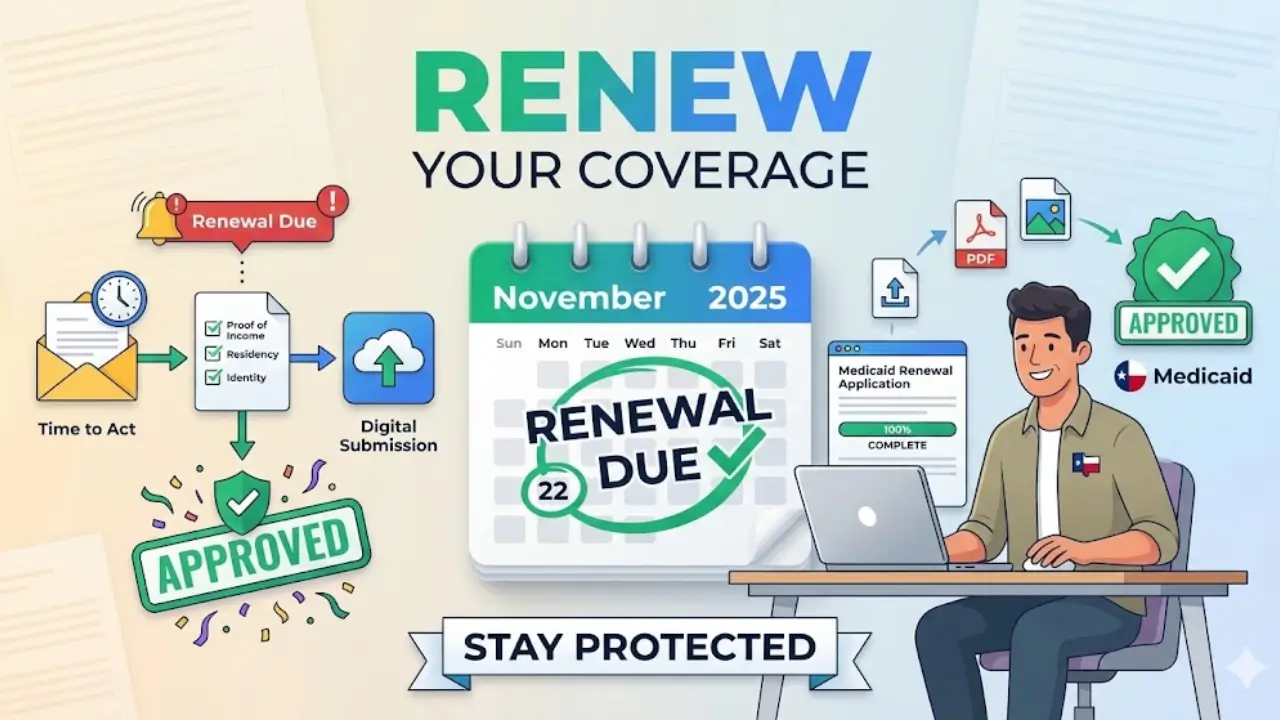
If you already have Medicaid in Texas, keeping your coverage means renewing it when it’s time. Renewal happens every year. It makes sure your income, household size, address, and other details are still up to date.
This guide walks you through how to renew your Texas Medicaid in 2025.
When you get a renewal notice, how to send in the form, what documents you’ll need, and what happens if you miss the deadline or your details have changed.
Before you jump in, you may want to refresh what your coverage includes.
Annual Renewal Requirements
Every Texas Medicaid member must renew when HHSC (Texas Health & Human Services Commission) asks. You’ll get a renewal request each year.
It covers all major programs, including those for children, pregnant people, adults, and those with disabilities.
Because the federal “continuous coverage” requirement ended in March 2023, states like Texas must check eligibility again.
If you don’t respond to your renewal packet, your benefits may end even if you still qualify. That’s why it’s key to act promptly.
Renewal Notice Timeline
HHSC sends renewal information before your current benefits expire. You might receive:
- A yellow envelope from HHSC that says “Action Required” on the front.
- An electronic notice if you opted into digital mail through your YourTexasBenefits online account.
Expect to get the renewal packet about 30–60 days before your coverage end date. For example: if your coverage ends June 30, you may receive the renewal request in early May.
Check your email, physical mailbox, and login to your online account so you don’t miss the notice.
How to Submit Renewal Forms
You have four main ways to complete your renewal:
Online
Go to YourTexasBenefits.com and log into your account (or create one). Look for your case and choose “Renew Benefits”. Upload required documents. Confirm submission.
Using the website is fastest and easiest.
Paper Mail
If you prefer, fill out the renewal form included in the packet or download it online. Attach copies of your documents and mail it to the address listed in your packet.
Note: mailed forms usually take longer to process.
Phone
Call 2-1-1 Texas, choose the health services option, and tell the agent you need to renew Medicaid. They can guide you through or send you a packet.
Phone submission works when you don’t have a reliable internet.
In-Person
Visit a local HHS eligibility office or community partner. Bring your documents and meet with staff who can help you fill out the renewal.
Regardless of method, make sure you submit your renewal before your current coverage ends to avoid interruption.
Before submitting, you may want to check whether your income still qualifies: check updated income requirements
Required Documentation
Having your paperwork ready speeds up renewal. Most people will need:
- Proof of income (recent pay stubs, tax return, or unemployment letter)
- Proof of identity (driver’s license, state ID, or birth certificate)
- Proof of Texas residency (lease, utility bill, or official mail)
- Social Security number(s) for household members
- Proof of U.S. citizenship or eligible immigration status (if needed)
- Updated medical expense records (for disability-related programs)
Tip: If you apply online, scanning or taking clear photos of your documents makes uploads easier.
Continuous Eligibility Periods
Some groups have “continuous eligibility,” meaning their coverage lasts a full year without a full review. For children under 19, Texas now must meet federal rules requiring at least 12 months of continuous eligibility.
That means even if their income changes, they may not need full redetermination every time, but you still need to watch for any renewal or contact from HHSC.
If you qualify under one of these groups, review your renewal notice carefully to follow the appropriate instructions.
What Happens If You Miss Renewal
If you don’t respond to your renewal packet by the deadline, your benefits could end. Here’s what you should know:
- Coverage usually ends on the last day of the month in which renewal is due but not completed.
- You may reactivate your benefits if you complete renewal within a set period (often 90 days).
- During the gap, you may lose access to services and face medical bills.
States often say you must act quickly after a missed renewal to avoid a long gap.
Presumptive Eligibility During Renewal
For some people, especially pregnant women or children, Texas uses “presumptive eligibility.” That means you may get temporary coverage while your renewal or eligibility is being processed. This ensures there’s no break in care.
If you’re in one of these groups and submit renewal or info quickly, you may keep care and services while waiting for final approval.
Appeals Process
If you get a denial notice or your renewal is delayed and you believe you still qualify, you have rights:
- You can request a fair hearing within 90 days of the decision.
- Submit any corrected information or missing documents.
- While your appeal is pending, coverage may continue in some cases.
Make sure you follow the instructions in your notice or call 2-1-1 for help.
Renewal for Different Eligibility Categories
Different groups may face slightly different renewal rules:
Children & CHIP: Most children get 12-month renewals and don’t need full recertification unless something changes.
Pregnant Women: Coverage continues for the pregnancy term and often extends postpartum; you’ll need to follow the renewal timeline for your category.
Aged, Blind & Disabled: These groups often have additional checks, such as asset reviews or special medical need criteria.
Medically Needy / Spend-Down: If you qualify under medically needy rules, you’ll have to verify expenses and income each renewal.
Always check your renewal notice to see which category and requirements apply to you.
Frequently Asked Questions (FAQ)
1. When will I know it’s time to renew my Texas Medicaid?
You’ll get a notice from HHSC in a yellow envelope that says “Action Required.” Or you’ll get an alert if you have a YourTexasBenefits online account. Log in and check the “Time to Renew” column.
2. Can I renew my Medicaid online?
Yes. Go to YourTexasBenefits.com, sign in, and select the renewal option. Upload documents and submit for review.
3. What if I have new income or I moved since the last renewal?
You must report those changes when you renew. Some forms let you update income and address at the same time. Failure to update can lead to denial.
4. How long does the renewal process take?
Usually the state reviews renewal within a month or two. But if paperwork is missing, your renewal may take longer.
5. What if I miss the renewal deadline?
Your Medicaid may end, but you often have a chance to apply again or complete the renewal within a set time. Acting quickly is key.
6. Does my child stay covered even if I lose eligibility?
It depends. Children may have higher income thresholds or continuous eligibility, so check whether your child’s category allows renewal under different rules.
Final Tips & Next Steps
Don’t wait until the last minute to renew your Texas Medicaid. Gather your documents early, update your contact info, and choose the renewal method that fits your situation: online, by mail, phone, or in person.
Keep your address and phone number up to date, so HHSC can reach you.
If you miss the deadline or your information changes, act right away to avoid a gap in coverage.
Visit YourTexasBenefits.com or call 2-1-1 for free help. Staying covered means staying healthy.