Texas Medicaid managed care can feel like a maze. This article covers enough health policy to fully understand it.
In 2025, with the shutdown messing up payments and enrollment, these plans, called MCOs or managed care organizations, are how most folks get their Medicaid benefits.
If you’re looking for Texas Medicaid MCO options, Medicaid HMO Texas choices, or how to choose a Medicaid plan in Texas, I’m breaking it down.
We’ll cover the programs like STAR Medicaid Texas, MCO lists by region, networks, switching, and tips to pick the right one.
Let’s make this simple so you can focus on your family.
What is Managed Care?
Managed care is how Texas runs most of its Medicaid, through private companies called MCOs that handle your benefits.
Instead of the state paying doctors directly, you pick an MCO like Molina or Superior, and they set up a network of providers, coordinate care, and add extras to keep costs down.
It’s like an HMO: You choose a primary doctor from their list, get approvals for specialists, but it’s all covered under Medicaid rules.
This setup serves 4 million Texans, saving money by focusing on prevention and cutting waste. Fee-for-service (old way, state pays directly) still exists for some rural areas or special cases, but 90% are in managed care.
The shutdown delayed some switches, but MCOs kept basic services going. For the big picture, see our overview of Texas Medicaid programs.
STAR, STAR+PLUS, STAR Kids, STAR Health Programs
Texas splits Medicaid managed care into programs based on your needs.
STAR is the main one for low-income kids, pregnant women, and families covers basics like doctor visits, hospital, and meds for over 3 million.
STAR+PLUS is for adults 65+, disabled, or with chronic conditions, and offers long-term help like home aides or nursing facilities, serving about 600,000.
STAR Kids targets children and young adults under 21 with disabilities, includes therapies, respite care, and coordination for 150,000 kids.
STAR Health is for foster kids and adopted children statewide through one MCO, covering trauma-informed care for 30,000 youth.
All use MCOs for better coordination, but the shutdown hit STAR+PLUS hardest with delayed home services.
If you’re required to join, check who is required to enroll in managed care.
List of MCOs in Texas (By Region)
Texas divides into 13 service areas, and MCOs vary by region and program. Here’s a 2025 snapshot from HHS, plans like Aetna, Molina, and United dominate, but check your zip for availability.
The shutdown didn’t change lists, but enrollment’s slower.
| Region | STAR MCOs | STAR+PLUS MCOs | STAR Kids MCOs | STAR Health MCO |
| Bexar (San Antonio) | Aetna, Amerigroup, Blue Cross Blue Shield, Molina, Superior | Amerigroup, Molina, Superior | Blue Cross Blue Shield, Superior | Superior (statewide) |
| Dallas | Aetna, Amerigroup, Blue Cross Blue Shield, Molina, Superior | Amerigroup, Molina, Superior | Blue Cross Blue Shield, Superior | Superior |
| El Paso | Amerigroup, El Paso First, Molina, Superior | Amerigroup, Molina | Amerigroup, Molina | Superior |
| Harris (Houston) | Amerigroup, Community Health Choice, Molina, Texas Children’s, United | Amerigroup, Molina, United | Texas Children’s, United | Superior |
| Hidalgo (Valley) | Driscoll, Molina, Superior, United | Molina, Superior | Driscoll, Superior | Superior |
| Jefferson (Beaumont) | Amerigroup, Community Health Choice, Molina, United | Amerigroup, Molina | Amerigroup, United | Superior |
| Lubbock | Amerigroup, FirstCare, Superior | Amerigroup, Superior | Amerigroup, Superior | Superior |
| Nueces (Corpus Christi) | Driscoll, Superior, United | Superior, United | Driscoll, United | Superior |
| Tarrant (Fort Worth) | Aetna, Amerigroup, Blue Cross Blue Shield, Cook Children’s | Amerigroup, Molina | Blue Cross Blue Shield, Cook Children’s | Superior |
| Travis (Austin) | Blue Cross Blue Shield, Sendero, Superior | Amerigroup, Blue Cross Blue Shield | Blue Cross Blue Shield, Superior | Superior |
| Central Texas | Amerigroup, Blue Cross Blue Shield, Superior | Amerigroup, Blue Cross Blue Shield | Blue Cross Blue Shield, Superior | Superior |
| Northeast Texas | Amerigroup, Molina, Superior | Amerigroup, Molina | Amerigroup, Superior | Superior |
| West Texas | Amerigroup, FirstCare, Superior | Amerigroup, Superior | Amerigroup, Superior | Superior |
These are the main ones, HHS updates yearly, and 2025 added Wellpoint (rebranded from Amerigroup in some spots). For your area, use HHS’s plan finder.
How to Choose a Health Plan
Picking a Texas Medicaid health plan starts with your packet from HHS after approval, you get at least two MCO choices based on region and program. Look at report cards for star ratings on care quality, then check if your doctors are in-network. Value-added services (extras like gift cards for checkups) can sway it, more below.
Call 800-964-2777 for help, or use the online tool at YourTexasBenefits.com . The shutdown delayed some packets, so log in to pick. Choose within 30 days, or one gets assigned, better to decide yourself.
Provider Networks and Restrictions
MCOs build networks of doctors, clinics, and hospitals, which you must use in-network for full coverage, except for emergencies.
Restrictions? Referrals for specialists in some plans, but STAR Kids eases that for therapies. Check directories online, search by zip or specialty.
If your doctor drops out, you can switch. Shutdown strained networks with payment delays, but MCOs like Superior added telehealth to fill gaps. Find yours at find providers in your plan network.
Switching Plans
Not happy? Switch anytime in Medicaid managed care, no lock-in. Call the helpline or app within 90 days of start for free changes; after, once a year unless good cause (like network loss). STAR+PLUS/STAR Kids allow more flexibility for care needs.
The process takes 15-45 days, shutdown added backlog, so plan ahead. Report issues to keep benefits flowing.
Service Coordination
For complex needs in STAR+PLUS or STAR Kids, MCOs assign coordinators, nurses or social workers who link you to doctors, home help, or equipment. They build custom plans, visit homes, and cut red tape. STAR Health adds trauma specialists for foster kids.
It’s free, and 2025 updates boosted tele-coordination amid shutdown. If uncoordinated, escalate to the plan’s grievance line.
Value-Added Services
MCOs sweeten the deal with extras beyond basics, value-added services like $20 gift cards for well-child visits, free cell phones for moms, or gym memberships. In 2025, Superior offers pest control for asthma homes; Molina adds doula support for pregnancies. STAR+PLUS might include meal delivery post-hospital.
Charts on the HHS site compare by plan, check yours for savings. Shutdown didn’t cut these, but availability varies by region.
Complaints and Grievances
Got a problem? Contact your MCO first, call the number on your card for complaints like denied services. If no fix in 30 days, escalate to HHS at 800-252-8263 or online form. Fair hearings are free, with legal aid if needed.
The Ombudsman helps too, call 877-787-8999. In 2025, HHS added online tracking for grievances amid shutdown complaints.
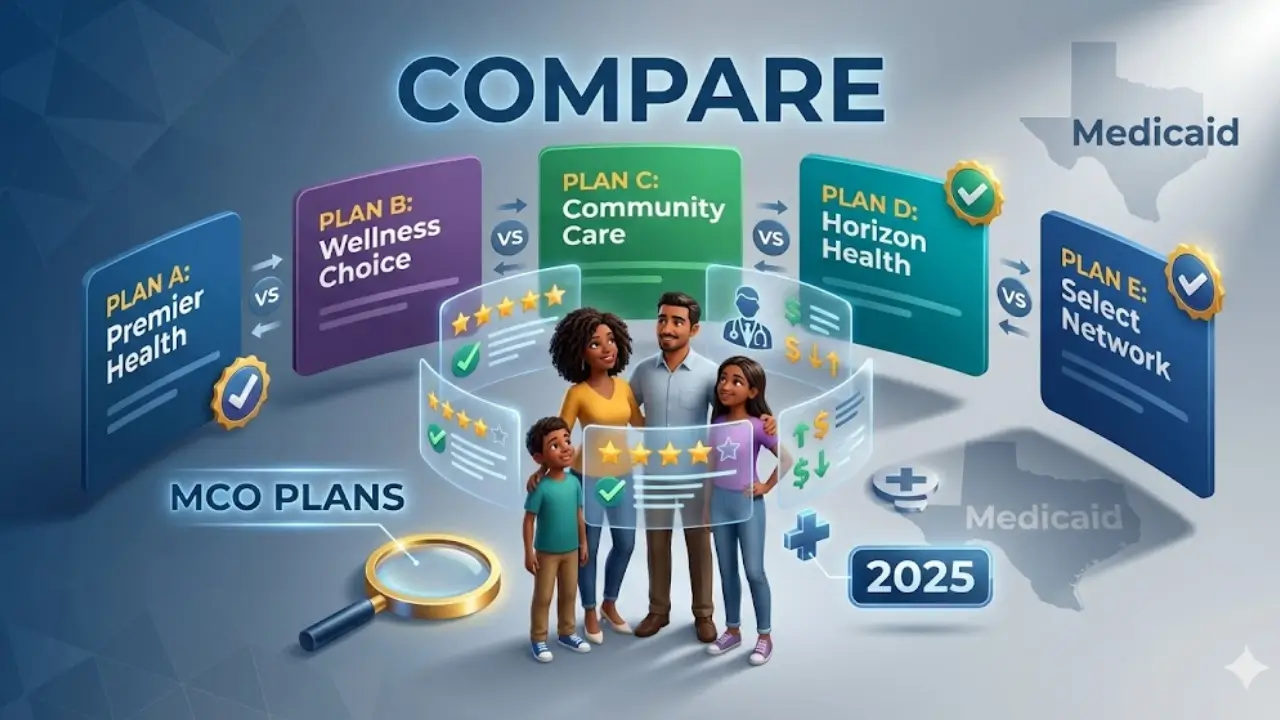
Plan Comparison Tools
HHS’s star ratings (1-5) score MCOs on timeliness, satisfaction, view by program/region at their site. Value-added charts list extras side-by-side. Use the helpline for personalized picks.
For 2025, a new app tool lets you filter by network doctors. It’s all free, start at YourTexasBenefits.com
Fee-for-Service vs. Managed Care
Fee-for-service (FFS) is the old way: State pays providers directly, no network limits, but less coordination, still for rural areas or special cases like transplants. Managed care (90% of Texas Medicaid) uses MCOs for networks, coordinators, and extras, but requires referrals.
FFS has no premiums; managed care adds value but potential waits. Shutdown hit FFS harder with direct delays. Most switch to managed for better wraparound.
Texas Medicaid managed care isn’t one-size-fits-all, but picking the right MCO makes a difference. If you’re enrolling or switching, call today, your health plan shapes your care. Questions? HHS is there. Stay healthy out there.
Frequently Asked Questions
What is Medicaid managed care in Texas?
It’s a system where private health plans (MCOs) like Superior or Molina handle your Medicaid benefits. You pick a plan, use their doctor network, and get extra services they offer.
What’s the difference between STAR, STAR+PLUS, STAR Kids, and STAR Health?
Each program serves a different group: families (STAR), seniors and disabled adults (STAR+PLUS), kids with disabilities (STAR Kids), and foster youth (STAR Health). Benefits are similar, but support levels and services change based on your needs.
Which MCOs are available in my area?
Texas has 13 service regions, and available plans depend on where you live. Check the HHS plan finder to see the exact MCOs for your ZIP code.
How do I choose the best Medicaid MCO?
Pick the plan that has your doctors in-network and strong ratings for care quality. Extras like gift cards, dental perks, or transport can also help you decide.
How do provider networks work?
You must use doctors and hospitals in your MCO’s network unless it’s an emergency. Some plans need referrals to see specialists, but rules vary by program.
Can I switch Medicaid plans?
Yes, you can switch anytime in your first 90 days or once a year after that. You can also switch sooner if there’s a problem, like losing your doctor.
What is service coordination?
It’s free support from a nurse or case manager who helps people with complex needs, especially in STAR+PLUS and STAR Kids. They help you get therapies, equipment, home care, or specialist visits.
What are “value-added services”?
These are extra perks MCOs offer, like gift cards, fitness benefits, pest control for asthma, or doula support. Extras differ by plan and region.
How do I file a complaint or appeal?
Start by calling your MCO using the number on your card. If they don’t fix it, you can escalate to Texas HHS or request a fair hearing.
What tools help me compare Medicaid plans?
HHS offers star ratings, plan comparison charts, and a new search tool to filter by your doctor. You can also call the helpline for help choosing.
What’s the difference between fee-for-service and managed care?
Fee-for-service is the old system where the state pays doctors directly, but it has less care coordination. Managed care offers networks, coordinators, and extras, which now covers about 90% of Texans in Medicaid.