Yes — but only in some states, and only up to a point. Whether Medicaid pays for your dental care as an adult depends entirely on where you live.
Federal law requires every state to cover dental care for children under 21. For adults, dental coverage is optional. Each state picks its own rules. That’s why people call it a “zip-code lottery.”
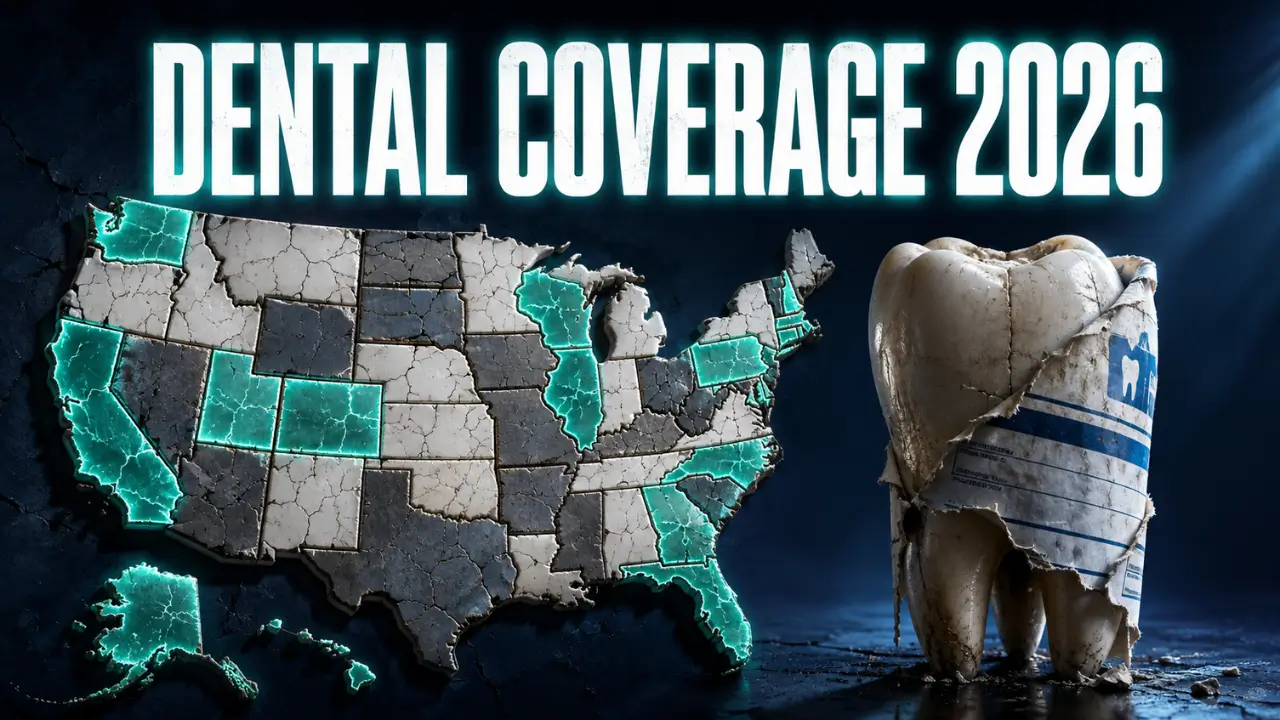
As of mid-2026, about 18 states offer truly comprehensive adult dental coverage with no annual dollar cap. Roughly 33 states plus D.C. cover at least some extensive or limited restorative care, like fillings or extractions. A handful of states cover emergency extractions only — or nothing at all.
Your exact benefits can also depend on your managed care organization (MCO), your ZIP code, and whether you’re pregnant or have a disability. Always confirm your own state’s current rules before booking care.
Quick Summary
- Adult dental coverage under Medicaid is optional and varies by state — kids’ coverage is mandatory everywhere.
- About 18 states offer comprehensive coverage (exams, fillings, crowns, root canals, dentures) in 2026.
- About 9 states offer limited coverage — usually just cleanings, exams, and simple extractions.
- About 7–8 states cover emergency extractions only; Alabama covers almost nothing for most adults.
- Dental implants are almost never covered anywhere — states approve dentures instead.
- If you’re dual-eligible (Medicare + Medicaid), Medicaid is your primary dental payer.
What Medicaid Covers for Adult Dental Care
Medicaid dental benefits for adults fall into three general tiers: comprehensive, limited, and emergency-only. Each state sets its own rules, and some update them every year.
These tiers aren’t official government labels. They’re a practical way to compare states based on what services are actually covered and whether there’s an annual dollar cap.
Comprehensive or Extensive Coverage States
These states typically cover exams, cleanings, X-rays, fillings, and major services like crowns, root canals, or dentures. Some still cap benefits at $1,000–$1,500 a year.
| State | Coverage Notes |
|---|---|
| Alaska | Preventive, restorative, dentures; annual cap applies |
| Arkansas | Exams, cleanings, fillings, extractions; may exclude crowns/dentures |
| California | Medi-Cal Dental: exams, fillings, crowns, root canals, dentures, scaling |
| Colorado | Annual cap raised to $1,500; fillings, root canals, crowns, dentures |
| Connecticut | Wide range of services; annual maximums may apply |
| Delaware | Preventive and restorative services for adults |
| District of Columbia | Broad diagnostic, preventive, restorative services |
| Hawaii | Expanded 2023: preventive, diagnostic, restorative care |
| Idaho | No annual benefit maximum as of 2026 (Idaho Smiles/MCNA) |
| Illinois | Preventive and restorative; pre-authorization often required for major work |
| Kentucky | Exams, X-rays, fillings, extractions, dentures |
| Maine | Comprehensive Adult Dental Benefit (2022): diagnostic through oral surgery |
| Maryland | Permanently expanded 2023; no annual cap |
| Massachusetts | MassHealth: cleanings, fillings, dentures, and more |
| Michigan | Healthy Michigan Plan: exams, cleanings, fillings, dentures |
| Minnesota | Broad range of services |
| Montana | Annual cap $1,125; exams, cleanings, fillings, extractions |
| New Jersey | Exams, cleanings, fillings, crowns, root canals, dentures |
| New Mexico | Exams, cleanings, restorative services |
| New York | Preventive, restorative, prosthodontics; strict medical-necessity rules for replacements |
| North Carolina | Expanded Dec. 2023: exams, cleanings, fillings, extractions, partials/dentures |
| North Dakota | Exams, cleanings, fillings, dentures |
| Ohio | Cleanings, fillings, crowns, root canals, dentures |
| Oklahoma | Expanded to cover preventive and restorative care |
| Oregon | Oregon Health Plan: cleanings, fillings, immediate dentures |
| Rhode Island | Exams, fillings, root canals, dentures |
| South Dakota | Annual cap $1,000; preventive, restorative, dentures |
| Utah | Widespread preventive and restorative care for eligible adults |
| Vermont | Annual cap applies; preventive, restorative, dentures |
| Virginia | Expanded 2021: exams, cleanings, fillings, dentures, root canals |
| Washington | Apple Health: exams, cleaning, fillings, extractions, dentures |
| West Virginia | Expanded 2021; $1,000 annual limit; preventive, restorative, dentures |
| Wisconsin | Preventive, restorative, and prosthodontics |
Limited Coverage States
These states usually cover preventive care and simple extractions, but often exclude crowns and root canals, or cap benefits low.
| State | Coverage Notes |
|---|---|
| Indiana | Capped at $1,000/year; exams, cleanings, extractions, some fillings |
| Iowa | Dental Wellness Plan: exams, cleanings, extractions; more requires earned benefits |
| Kansas | Exams and cleanings; recently expanded to include fillings/extractions |
| Louisiana | Exams, X-rays, dentures; routine fillings usually excluded unless pregnant/disabled |
| Missouri | Exams, cleanings, X-rays, fillings, extractions; some gaps remain |
| Nebraska | Managed by MCNA: cleanings, fillings, extractions; typically capped |
| Pennsylvania | Exams, cleanings, extractions; root canals/crowns limited to medical necessity |
| South Carolina | Annual benefit $1,000; extractions, fillings, cleanings |
| Wyoming | Emergency extractions and limited preventive care |
Emergency-Only or No Coverage States
These states cover only pain relief and infection control — usually a tooth extraction — or nothing at all for most adults.
| State | Coverage Notes |
|---|---|
| Alabama | No general adult benefit; pregnant women only |
| Arizona | Emergency care up to $1,000/year |
| Florida | Emergency extractions and pain relief only; no cleanings or fillings |
| Georgia | Extractions for pain relief only; no preventive/restorative care |
| Mississippi | Extractions and pain relief only |
| Nevada | Emergency extractions and palliative care |
| Tennessee | Emergency extractions; pregnant women and some waivers may get more |
| Texas | Emergency extractions only; no preventive care |
Who Qualifies for Adult Dental Benefits
You need active Medicaid eligibility in your state to get any dental benefit at all. Dental coverage isn’t a separate program — it rides on top of your regular Medicaid enrollment.
Pregnant Adults Often Get More
Many states expand dental benefits for pregnant and postpartum enrollees, even in states with limited general adult coverage. This is because oral health problems are linked to pregnancy complications.
Adults With Disabilities May Get More
Some states, like Vermont, remove annual caps for adults in certain disability waiver programs. Check your state’s Medicaid dental page or your MCO handbook for these carve-outs.
Dual-Eligible Seniors (Medicare + Medicaid)
If you have both Medicare and Medicaid, Medicaid is your primary dental payer. Original Medicare doesn’t cover routine dental care at all, so your state’s Medicaid dental tier determines what you can get.
What Medicaid Does Not Cover
Even in comprehensive states, some services are almost always excluded.
- Dental implants: Almost never covered anywhere. States classify implants as elective and approve dentures instead.
- Cosmetic procedures: Teeth whitening, veneers for appearance only, and similar services are excluded everywhere.
- Services above the annual cap: If your state has a dollar limit (often $1,000–$1,500), you pay out of pocket once you hit it, unless you qualify for a carve-out (pregnancy, disability waiver).
How to Check Your State’s Exact Dental Benefits
- Find your state Medicaid agency’s dental page. Search “[your state] Medicaid dental benefits” and look for a .gov domain.
- Check your MCO handbook. If your Medicaid is run through a managed care organization, your specific plan may offer extra benefits beyond the state minimum.
- Call the number on your Medicaid card. Ask specifically: annual dollar cap, covered services, and whether pre-authorization is needed for major work.
- Confirm before you book. Rules change often — several states expanded benefits in just the last two years.
What If Your State Only Covers Emergencies?
If you live in an emergency-only or no-coverage state, you have other low-cost options.
- Federally Qualified Health Centers (FQHCs): Community clinics that charge on a sliding scale based on income.
- Dental schools: Supervised student clinics often charge 30–50% less than private practices.
- Donated Dental Services (DDS): Programs like the Dental Lifeline Network help seniors and people with disabilities get free or reduced-cost care.
FAQ
Q: Does Medicaid cover dental for adults in every state?
A: No. Adult dental coverage is optional under federal law. About 18 states offer comprehensive benefits in 2026, most others offer limited or extensive coverage, and a few states cover emergencies only.
Q: Does Medicaid cover dental implants?
A: Almost never. Implants are considered elective in nearly every state. Medicaid typically approves dentures instead when you’ve lost teeth.
Q: Does Medicaid cover braces or orthodontics for adults?
A: Rarely. Orthodontics for adults is generally not covered, even in comprehensive states, unless there’s a documented medical necessity tied to a jaw or bite condition.
Q: What states have no adult Medicaid dental coverage at all?
A: Alabama is the most restrictive, covering only pregnant women. States like Texas, Florida, Georgia, and Mississippi cover emergency extractions only for most adults.
Q: Is Medicaid dental coverage the same as CHIP dental coverage?
A: No. CHIP covers children in families that earn too much for Medicaid but still need help. Children’s dental under both Medicaid and CHIP is comprehensive by federal law.
Q: If I have Medicare and Medicaid, which one pays for dental?
A: Medicaid is your primary dental payer if you’re dual-eligible. Original Medicare doesn’t cover routine dental care, so your access depends on your state’s Medicaid dental tier.
Sources
- Medicaid.gov: Dental Care — Official CMS overview of mandatory child (EPSDT) vs. optional adult dental benefits.
- KFF State Health Facts: Medicaid Dental Coverage — State-by-state Medicaid adult dental benefit tracker.
Related: See our Medicaid Income Limits by State (2026) guide to check whether you qualify for Medicaid before checking your dental benefit tier.
Written & Reviewed by Akash Biswas, MSW | Former Medicaid Caseworker Trainer | Verified against Medicaid.gov and state Medicaid agency guidelines | Last Updated: August 2026
CheckMedicaid.com is not affiliated with any government agency. This content is for educational purposes only. For official eligibility and benefit details, contact your state Medicaid office or visit Medicaid.gov. Dental benefit tiers change frequently — always verify current coverage with your state before scheduling care.
Check your state’s dental benefits today, or contact your state Medicaid office to confirm your coverage before you book an appointment.