
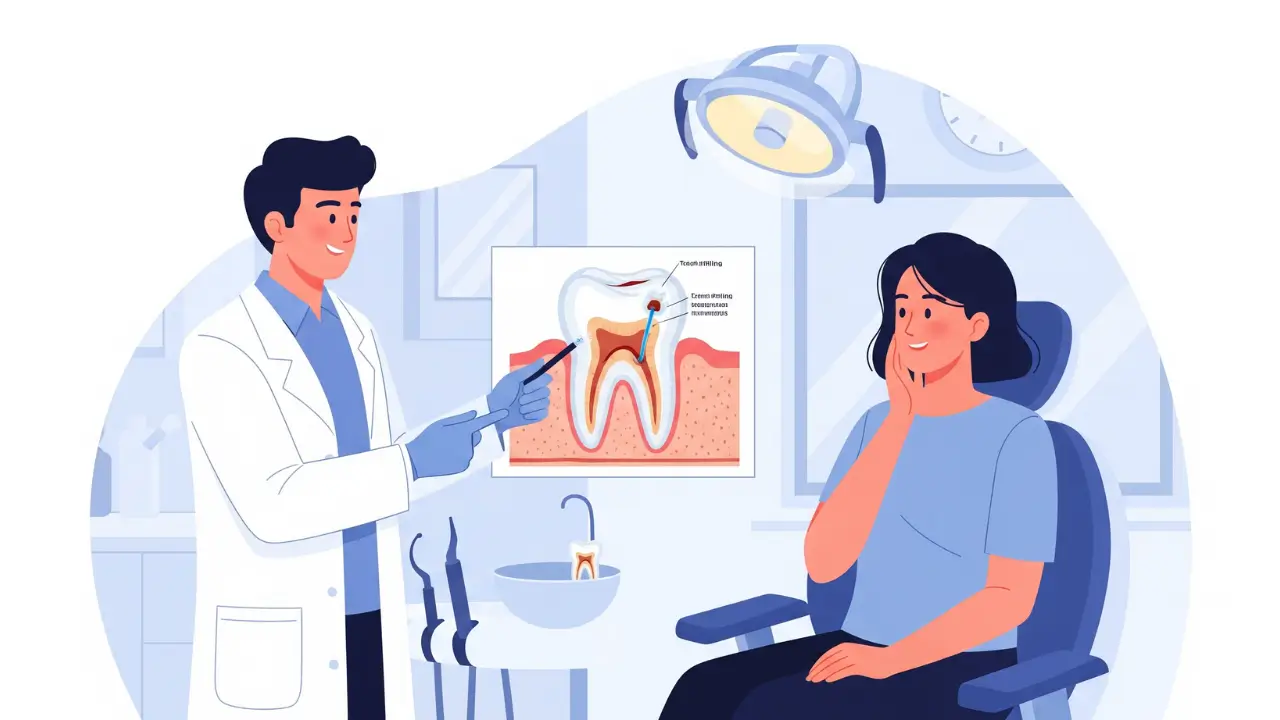
Dental fillings fix holes in teeth caused by decay. They stop pain and prevent bigger problems. People get them for cavities or small breaks.
Medicaid often covers fillings. But it depends on your age and state. Kids under 21 usually get help.
Adults might in some places, but not everywhere. Coverage focuses on medical need, not looks. This keeps costs down for the program.
What Are Dental Fillings and Why Are They Needed?
A dental filling is material put in a tooth to repair damage. It fills the space left after removing decay. This restores the tooth’s shape and function.
Common reasons include cavities from too much sugar or poor brushing. Tooth decay eats away enamel. Minor cracks from biting hard food need fillings too. Dentists use materials like amalgam or composite.
Amalgam is silver-colored and strong. Composite matches tooth color. Fillings help you chew without pain and keep teeth healthy longer.
Does Medicaid Cover Fillings for Children?
Yes, Medicaid covers fillings for most children under 21. Federal rules require this under EPSDT. This program screens kids early and treats dental issues. Fillings count as necessary if they stop pain or infection.
For example, a cavity in a back tooth gets covered to help with eating. States must approve if a dentist shows a need.
Prior approval is sometimes required. But it’s straightforward. This ensures kids get care without big gaps.
Does Medicaid Cover Fillings for Adults?
Adult coverage for fillings varies by state. Federal law doesn’t require adult dental. So states decide. In states with full dental benefits, fillings often get covered for medical needs.
This includes cavities causing issues. About 38 states offer some adult dental in 2026. Limited states might pay for basic fillings. Emergency-only states focus on pain relief, like pulling teeth instead.
Fillings are more common than crowns, but check rules. Medical need is key. Dentists prove the filling fixes a health problem. Not all states cover cosmetic types.
When Medicaid Will Cover Dental Fillings
Medicaid pays when fillings are medically necessary. This means cavities that cause pain or swelling. It also covers if decay risks spreading infection.
Tooth function matters too. A filling on a molar helps chewing food. Coverage happens when other fixes won’t work.
States approve if dentists show these needs. This keeps the program focused on health.
When Medicaid Will Not Cover Fillings
Medicaid denies cosmetic fillings. These improve looks, not health. If a tooth can’t be saved, they suggest pulling it instead.
Missing approval leads to no pay. Elective fillings for small spots might get turned down.
In emergency-only states, routine fillings don’t qualify. Always confirm first.
Types of Fillings Medicaid May Cover
Medicaid covers basic fillings when needed. The type depends on state rules and tooth location. Here’s a simple overview:
| Filling Type | Material | Front Teeth (Anterior) | Back Teeth (Posterior) |
| Amalgam (Silver) | Metal alloy (silver, mercury, tin, copper). Durable and highly visible. | Rarely used due to aesthetics, but typically fully covered if chosen. | Standard of Care. Fully covered by most state Medicaid plans due to durability. |
| Composite (White/Resin) | Tooth-colored plastic and glass mixture. Blends with enamel. | Fully Covered. Considered medically necessary for visible teeth. | Restricted. Often “downgraded” (see below) or not covered for adults in some states. |
What Medicaid Requires Before Approving a Filling
You start with a dental exam. X-rays show the decay size. The dentist notes why a filling fits. Proof of medical need helps. This includes pain or risk details. Submit to Medicaid for review. Decisions come in weeks. Keep records handy.
What to Do If Medicaid Denies a Filling
You can appeal the denial. Send more dentist notes. States give a timeline for this. Ask about other options like pain meds. A second opinion might help your case. Talk to your dentist. They guide you through steps.
How Much Fillings Cost Without Medicaid
Without coverage, fillings cost $50 to $300 each. Amalgam is cheaper at $50 to $150.
Composite runs $90 to $250. This adds up fast. Medicaid approval saves money for those who qualify.
How to Check Your State’s Medicaid Dental Coverage
Call your state Medicaid office. Ask about fillings. They explain your benefits. Your dentist’s billing staff knows too.
They check for you. Look on the state website. Search for dental coverage details. This gives clear answers.
FAQs; Medicaid and Dental Fillings
Does Medicaid cover dental fillings in 2026?
Yes. Medicaid usually covers fillings for children under 21 in all states. Adult coverage depends on the state. Some states cover fillings fully, some limit them, and others only cover emergencies.
Are dental fillings free with Medicaid?
In most cases, yes. Children usually pay nothing. Adults may have small copays in some states. But many fillings are covered at no cost when they are medically needed.
Does Medicaid cover fillings for cavities?
Yes. Cavities are one of the main reasons Medicaid approves fillings. If decay causes pain, infection risk, or affects eating, Medicaid usually considers the filling medically necessary.
Will Medicaid cover white (composite) fillings?
Sometimes. Many states only cover white fillings for front teeth. Silver (amalgam) fillings are more commonly approved because they cost less and last longer.
Can Medicaid deny coverage for a filling?
Yes. Medicaid may deny a filling if it is considered cosmetic, not medically needed, or missing prior approval. Emergency-only states may deny routine fillings altogether.
Are fillings covered in emergency dental situations?
Often yes. Even states with limited adult dental benefits usually cover emergency fillings if they stop severe pain or prevent infection from spreading
Do I need approval before getting a filling?
Sometimes. Many states require prior authorization, especially for adults. Your dentist usually handles this by sending X-rays and notes to Medicaid.
How can I find out if my state covers fillings?
Call your state Medicaid office, check your state’s Medicaid website, or ask your dentist’s billing staff. They can confirm coverage before treatment.
Key Takeaways on Medicaid Coverage for Fillings
Medicaid often covers dental fillings when they are medically necessary. Children under 21 are usually covered in all states. Adult coverage depends on the state and may be limited or unavailable. Silver fillings are more commonly approved than white fillings. Always check your state’s Medicaid rules or confirm with your dentist before treatment.