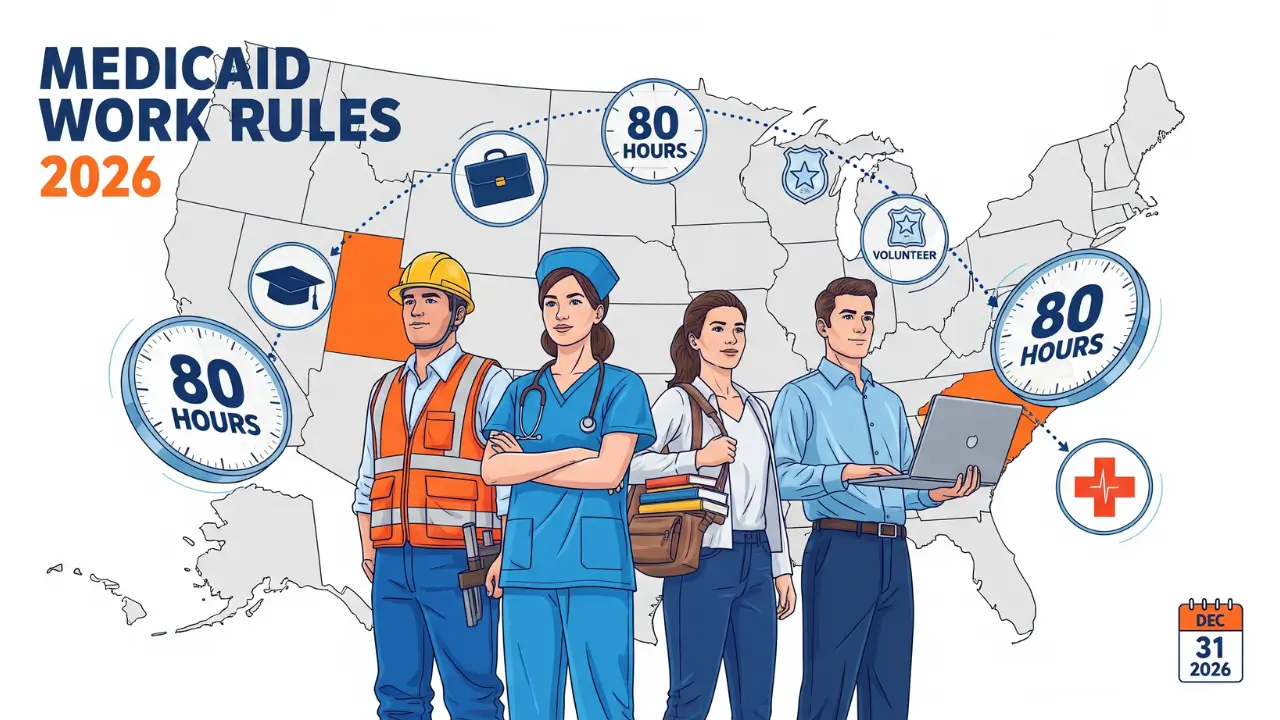
Most states are preparing for new Medicaid work rules in 2026. The federal government passed the “One Big Beautiful Bill Act” (H.R. 1).
This law requires adults on Medicaid expansion to work or volunteer 80 hours per month. States must start enforcing these rules by December 31, 2026.
Georgia already has active work requirements. Nebraska will start theirs on May 1, 2026. All other states are getting ready to launch by the end of 2026.
Quick Summary:
- New federal law requires 80 hours of work per month for Medicaid adults ages 19–64
- Most states will enforce rules starting December 31, 2026
- Georgia has active requirements now through its Pathways to Coverage program
- Nebraska launches work requirements on May 1, 2026
- Many people are exempt: pregnant women, parents with young children, disabled individuals, and students
- States will send notification letters in summer 2026 explaining how to report hours
What Are Medicaid Work Requirements?
Work requirements mean you must do certain activities each month. You need to complete 80 hours of approved activities.
If you don’t meet this rule, you could lose your Medicaid coverage.
This applies to adults aged 19 to 64 who get Medicaid through expansion programs.
What Counts as “Work” Under the New Rules?
You can meet the 80-hour requirement through different activities:
Approved Activities:
- Paid employment – Any job, full-time or part-time
- Community service – Volunteering at nonprofits, churches, or schools
- Job training – Programs that teach new work skills
- Education – College classes, GED programs, or vocational training (must be enrolled at least half-time)
- SNAP or TANF work programs – Following work rules for other benefit programs
- On-the-job training – Learning while working at a new job
You can mix and match activities. For example, you could work 60 hours and volunteer 20 hours.
Who Is Exempt From Work Requirements?
Many people don’t have to follow these rules. The federal law protects certain groups.
You Are Exempt If You:
- Are under age 19 or over age 64
- Are pregnant or recently gave birth (postpartum period)
- Care for a child under age 13 (some states use age 14)
- Have a disability or are medically frail
- Have a substance use disorder receiving treatment
- Are a full-time or half-time student
- Were in foster care and are now under age 26
If any of these apply to you, you don’t need to report work hours. But you may need to show proof of your exemption.
2026 Timeline: When Requirements Start
The rollout happens in stages throughout 2026.
| Date | What Happens |
|---|---|
| January 2026 | States upgrade computer systems to track work hours |
| May 1, 2026 | Nebraska starts enforcing work requirements |
| June 2026 | Federal government releases final guidance to all states |
| Summer 2026 | States mail notices to Medicaid enrollees explaining new rules |
| December 31, 2026 | All expansion states must enforce work requirements |
Most people will receive letters between June and August 2026.
These letters will explain:
- How many hours you need
- How to report your activities
- How to apply for an exemption
- What happens if you don’t comply
States With Active Rules in 2026
Georgia (Active Now)
Georgia is the only state currently enforcing work requirements. The program is called Pathways to Coverage.
Georgia Rules:
- Who it affects: Adults ages 19–64 earning up to 100% of Federal Poverty Level
- Requirement: 80 hours per month of approved activities
- Current enrollment: About 4,231 people (as of mid-2025)
- New for 2026: Parents with children under age 6 are now exempt
How to Report in Georgia:
You must document your hours each month. You can report through:
- The Georgia Gateway website
- By phone through the DFCS helpline
- In person at local offices
Georgia’s program runs through December 31, 2026. After that, it will transition to the new federal rules.
Official Georgia Medicaid Information: medicaid.georgia.gov
Nebraska (Starting May 1, 2026)
Nebraska will launch its work requirement program in spring 2026.
Nebraska Rules:
- Start date: May 1, 2026
- Who it affects: Medicaid expansion adults ages 19–64
- Requirement: 80 hours per month
- Exemptions: Medically frail, pregnant women, parents of children under age 13, full-time students
Nebraska is working with federal partners to set up reporting systems. More details will be available in March 2026.
How to Report Your Work Hours
Each state will create a system for tracking hours. Most states will offer multiple ways to report:
Reporting Options:
- Online portal – Upload pay stubs or volunteer letters
- Mobile app – Some states may offer smartphone apps
- Phone hotline – Call and report hours to a caseworker
- Mail – Send copies of work verification documents
Documents You May Need:
- Pay stubs from your employer
- Letter from volunteer coordinator on organization letterhead
- School enrollment verification
- Training program attendance records
Keep copies of everything you submit. States may audit your reports.
What Happens If You Don’t Meet Requirements?
If you don’t complete 80 hours or report your activities, you could lose Medicaid.
Typical Enforcement Process:
- First warning: You get a letter explaining the issue
- Second warning: Another letter with 30 days to comply
- Suspension: Your coverage stops if you don’t respond
- Reinstatement: You can reapply once you meet requirements
Most states will give you multiple chances before ending coverage. But don’t wait—respond to all letters immediately.
How to Prepare for the New Rules
Start getting ready now, even if your state hasn’t started enforcement.
Action Steps:
- Update your contact information – Make sure your Medicaid agency has your current address, phone, and email
- Save your mail – Watch for letters from your state Medicaid office
- Keep work records – Start saving pay stubs and volunteer hours now
- Check if you’re exempt – If you qualify for an exemption, gather proof documents
- Ask questions – Call your state Medicaid helpline if you’re unsure about anything
Federal Medicaid Information: medicaid.gov
CMS Official Guidance: cms.gov
Frequently Asked Questions (FAQs)
1. Do work requirements apply to children on Medicaid?
No. Work requirements only apply to adults ages 19 to 64. Children under 19 keep their Medicaid no matter what. Parents may be exempt if they care for young children.
2. Can I count volunteer hours toward the 80-hour requirement?
Yes. Community service and volunteering count as qualifying activities. You need documentation from the organization confirming your hours. The volunteer work must be unpaid and for a nonprofit or community group.
3. What if I’m disabled but haven’t been approved for SSI or SSDI yet?
You should still apply for a medical exemption. Contact your Medicaid caseworker. Ask your doctor to provide documentation of your disability. States must exempt medically frail individuals, even without formal SSI approval.
4. Will college students lose Medicaid under the new work rules?
No. Students enrolled at least half-time are automatically exempt. You’ll need to provide proof of enrollment each semester. If you attend school and work, your hours may combine to meet the requirement.
5. What happens if I lose my job during the month?
Contact your state Medicaid office immediately. Most states allow “good cause” exceptions for job loss. You may need to show you’re actively looking for work. Some states require unemployment benefit registration.
6. Do these rules apply to traditional Medicaid or just expansion?
Work requirements mainly apply to Medicaid expansion adults (those in states that expanded under the Affordable Care Act). Traditional Medicaid for low-income families, pregnant women, elderly, and disabled people typically doesn’t have work requirements.
Final Thoughts
Medicaid work requirements are coming to most states by the end of 2026. You’ll need to complete 80 hours of work, volunteering, or education each month. Many people are exempt from these rules.
Watch your mail this summer. Your state will send information about how to report hours. Start keeping records of your work activities now.
If you have questions, contact your state Medicaid office. Don’t wait until the last minute to get help.