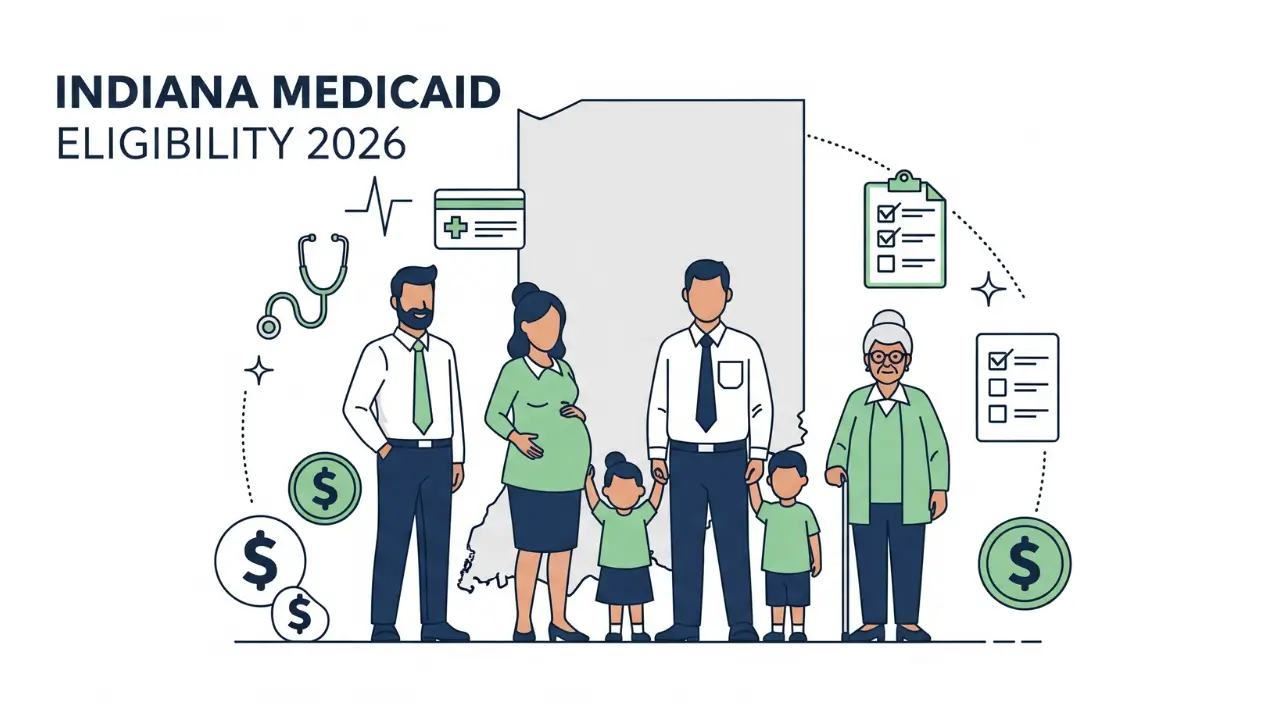
Understanding Medicaid eligibility in Indiana for 2026 can be confusing, especially with new income limits and program changes each year.
Many residents wonder whether small income increases, new benefits, or life changes will affect their coverage.
If you are unsure about your eligibility, this guide provides clear, trustworthy information to help you navigate Indiana Medicaid confidently.
Indiana Medicaid, known as Hoosier Healthwise and Hoosier Care Connect, covers children, adults, pregnant women, seniors, and individuals with disabilities.
Updates in 2026 include changes to income limits, federal poverty guidelines, and specific program rules, which may help some households qualify while requiring others to reassess their eligibility.
What Changed for Indiana Medicaid in 2026
Key updates for 2026 include:
- Federal Poverty Level (FPL) increased for 2026, slightly raising income limits across most Medicaid programs in Indiana.
- Income thresholds adjusted for adults, children, pregnant women, and seniors to reflect the new FPL.
- Eligibility for Medicaid expansion for adults remains stable, covering those earning up to 138% FPL.
- Long-term care and aged/disabled programs updated to align with the 2026 Federal Benefit Rate (FBR).
- Streamlined application processes and better online verification for income documentation were introduced.
These updates are important because even modest increases in income limits can allow more Hoosiers to qualify, particularly families and working adults near the cutoff.
Indiana Medicaid Income Limits 2026 (Monthly)
The following table outlines 2026 Medicaid income limits in Indiana by program type and household size:
| Eligibility Group | Single Adult | Family of 3 | Income Basis |
| Adults (19–64, Medicaid Expansion) | ~$1,626 | ~$3,354 | 138% FPL |
| Parents / Caretaker Adults | ~$1,626 | ~$3,354 | 138% FPL |
| Children (0–18) | ~$3,540 | ~$6,096 | ~312% FPL |
| Pregnant Women | ~$3,540 | ~$6,096 | ~312% FPL |
| Seniors / Disabled | ~$1,467 | ~$2,018 | SSI-based |
| Long-Term Care / Nursing Home | ~$2,742 | ~$5,484 | 300% FBR |
FPL = Federal Poverty Level; FBR = Federal Benefit Rate. Income is calculated monthly before taxes.
Indiana Medicaid Income Limits 2025 (For Comparison)
Here’s how 2026 compares to 2025 limits:
| Eligibility Group | Single Adult | Family of 3 |
| Adults (19–64) | ~$1,579 | ~$3,258 |
| Parents / Caretaker Adults | ~$1,579 | ~$3,258 |
| Children (0–18) | ~$3,450 | ~$5,940 |
| Pregnant Women | ~$3,450 | ~$5,940 |
| Seniors / Disabled | ~$1,447 | ~$1,987 |
| Long-Term Care | ~$2,720 | ~$5,440 |
Observation:
Income limits increased slightly in 2026, particularly for children and pregnant women. Adults and long-term care applicants see minor increases consistent with FPL updates.
What Is Medicaid Eligibility in Indiana?
Indiana Medicaid eligibility determines who can access health coverage through state programs like Hoosier Healthwise, Hoosier Care Connect, and traditional Medicaid.
Eligibility is mainly based on:
- Income relative to household size (MAGI rules for most adults, children, and pregnant women).
- Special categories for seniors and people with disabilities, which include asset limits.
- Residency and citizenship/immigration status.
In practical terms, if your monthly income is below the specified threshold for your household size and program, you may qualify for full Medicaid benefits.
Who This Applies To
Indiana Medicaid eligibility applies to:
- Adults aged 19–64 with low income (Medicaid Expansion)
- Parents or caretakers of children under 19
- Children under 19 (Hoosier Healthwise)
- Pregnant women needing prenatal and postpartum care
- Seniors 65+ or individuals who are blind or disabled
- People needing long-term care or nursing home services
Each program has different rules and income limits, so it’s important to identify your eligibility group.
Step-by-Step: How to Check Your Eligibility
Step 1: Determine Household Size
Include yourself, your spouse, and dependents claimed on taxes.
Step 2: Calculate Gross Monthly Income
Add all income sources:
- Wages or self-employment income
- Social Security and disability payments
- Unemployment or pensions
Step 3: Identify Your Program Category
Determine if you are an adult, parent, pregnant woman, child, senior, or disabled person.
Step 4: Compare Income With 2026 Limits
Use the 2026 table above to see if your income qualifies.
Step 5: Submit an Application
Apply online via the Indiana Family and Social Services Administration (FSSA) portal, by mail, or in person.
Tip: Report income changes immediately; Medicaid eligibility is reassessed monthly, and failure to update can affect coverage.
What’s Covered vs What’s Not
| Covered Services | Not Typically Covered |
| Doctor visits | Cosmetic procedures |
| Hospital care | Elective treatments |
| Prescription drugs | Non-medical travel |
| Mental health care | Private duty nursing |
| Pregnancy and prenatal care | Most adult dental care |
Coverage can vary by program and individual eligibility.
Important Rules, Limits, or Requirements
- Must be a resident of Indiana
- Must have citizenship or an eligible immigration status
- Income is generally counted monthly and before taxes
- Assets considered for seniors and long-term care programs
- Prompt reporting of income changes is required
Many eligibility issues arise from paperwork errors, not actual disqualification.
What Happens After You Apply
Once you submit your Medicaid application:
- Decision timeline: typically 30–45 days
- Verification: income and residency may need documentation
- Coverage: may be retroactive up to 3 months
- Appeals: available if denied, with clear instructions in writing
Helpful Tips or Alternatives
- Apply even if income is near the limit; sometimes, slight changes make a difference
- Children may qualify even if adults do not
- Check subsidized Health Insurance Marketplace plans if denied
- Free enrollment assistance is available through certified FSSA assisters
FAQs
1. What is the Indiana Medicaid income limit for adults in 2026?
Adults qualify up to ~138% of FPL, which is around $1,626/month for a single adult.
2. Are children eligible at higher income limits?
Yes, children under 19 may qualify up to ~312% of FPL.
3. Does Indiana Medicaid cover pregnant women?
Yes, income limits for pregnant women are higher than most adults, around $3,540/month for a single person.
4. Are Social Security benefits counted as income?
Yes, most Social Security and disability payments are included in income calculations.
5. Are assets counted for regular Medicaid?
Assets usually matter only for seniors and long-term care applicants.
6. How often does eligibility get reviewed?
Eligibility is reviewed monthly or when income changes.
Final Takeaway
Indiana Medicaid eligibility for 2026 reflects updated income limits and FPL adjustments. While changes from 2025 are modest, they can make a real difference for children, pregnant women, families, and adults near the cutoff.
Understanding your eligibility, accurately reporting income, and using the step-by-step process can help you secure coverage when you need it most.
Applying is often worthwhile, and free assistance is available to guide you through the process.